Who Is Actually Insured? Why Africa Needs a Clearer Picture of Insurance Coverage
By Uyo 4 min read
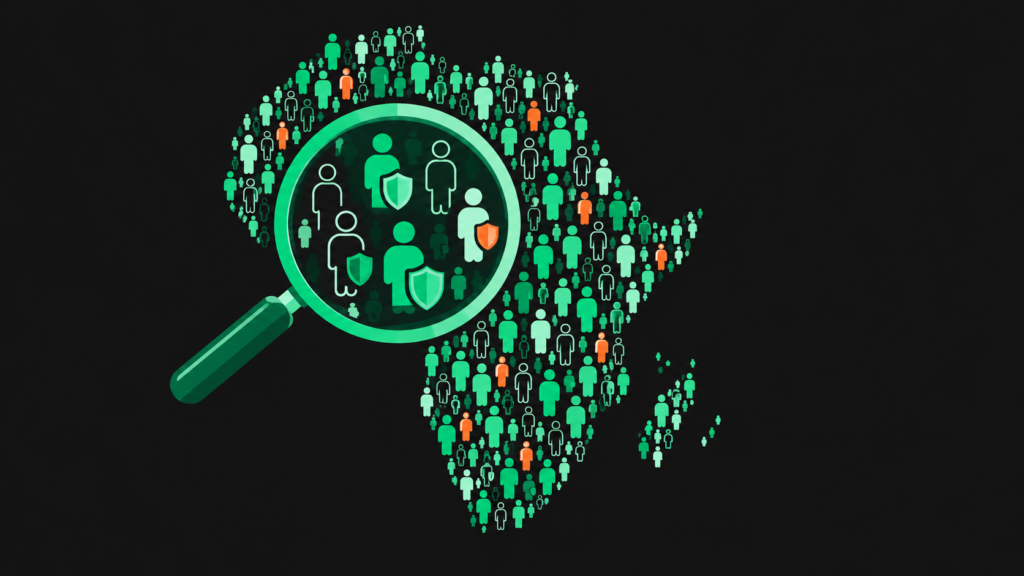
A Nigerian motorist pays for insurance, receives a certificate and puts it in the glove compartment. The purchase feels complete. Whether that document represents genuine protection is a question they may only confront after an accident.
NAICOM’s public policy verification portal gives consumers a way to check the validity of their insurance and verify providers’ credentials. It also supports regulatory monitoring of policy issuance. That infrastructure addresses a fundamental expectation: people should be able to confirm that the protection they purchased exists.
For insurance executives and regulators, this raises a broader question: can the industry reliably establish who is insured, across which providers, and with what active protection?
The answer shapes how accurately leaders measure growth, protect customers and extend insurance to underserved communities.
The blind spot behind the growth figures
Consider a hypothetical customer, Ada, who holds motor insurance with one provider, life insurance with another and health coverage through her employer. Each institution records her separately. Her maiden name appears on one account, her married name on another, and an outdated phone number on a third.
Those records represent legitimate coverage. Connecting them to one verified person, however, becomes difficult when institutions use different identifiers and disconnected systems.
Now multiply that challenge across a national market. Rising policy volumes can reflect existing customers purchasing additional products, new customers entering the market, or group policies covering many beneficiaries. Each tells a different story about inclusion.
Policy counts and unique insured people measure different things. Leaders need both, alongside reliable coverage information, to understand whom their growth is reaching.
Without that distinction, expansion strategies can overlook underserved groups, and inclusion programmes can struggle to demonstrate their actual reach.
Fragmentation carries a commercial cost
The same identity gaps create friction throughout the customer journey.
A broker collects identification documents that an underwriter requests again. A customer abandons an application after repeated verification steps. At claims stage, inconsistent records trigger further checks, delaying a decision when the policyholder needs certainty.
For insurers, these situations mean duplicated work and missed revenue opportunities. For customers, they can weaken confidence in the service they purchased.
Fragmentation also limits fraud detection. When each insurer can see only its own records, suspicious activity involving the same identity across providers becomes harder to investigate. Multiple policies can be entirely legitimate; detecting abuse requires reliable links between identities, policies and claims, followed by appropriate review.
Regulators face a related challenge: disconnected submissions make it harder to build a timely, coherent picture of market participation and emerging risk.
InsureGov gives the industry a common foundation
Seamfix’s InsureGov addresses this systemic problem through shared insurance identity infrastructure. Its central principle is straightforward: associate each policyholder with a unique, verified insurance identity that participating institutions can recognise.
That foundation connects customer verification with policy lifecycle information and regulatory oversight. The architecture outlined in Seamfix’s proposal combines:
- Biometric identity verification: face matching and liveness detection to strengthen confidence that an applicant or claimant is the person they claim to be.
- A unique insurance identifier: a consistent reference for linking a policyholder’s records across participating providers.
- API-based integration: connections between brokers, underwriters and supervisory systems, allowing institutions to retain their existing core platforms.
- Regulatory intelligence: connected information that supports risk-based supervision and more informed market development.
Together, these capabilities make trust easier to establish and maintain at scale. They support faster digital onboarding, more consistent verification and stronger investigation of identity-related risks.
Security and governance are essential to that value. Encryption, controlled access and clear rules for data use must accompany deployment, with KYC processes and privacy controls aligned to applicable national requirements.
A clearer picture creates room for growth
Imagine an insurance market where a verified customer can move through participating channels with fewer repeated checks. Where an insurer can reconcile identity records more confidently. Where regulators can distinguish additional policy purchases from first-time participation and identify where active coverage remains limited.
That visibility gives leaders a stronger basis for investment. It can guide distribution partnerships, improve the targeting of insurance education and help assess whether new products are reaching intended communities.
Across Africa, trusted identity can make digital financial services easier to access. For insurance, InsureGov provides the infrastructure to connect that ambition to measurable participation and accountable oversight.
Make identity infrastructure a leadership priority
Insurance growth depends on customers trusting their protection and institutions trusting the information behind it. Leaving identity fragmented makes both harder to achieve.
Executives and regulators should prioritise a shared identity foundation, define how participating institutions will connect, and establish measurable goals for onboarding, record quality and coverage visibility.
Partner with Seamfix to build an insurance market that can verify its customers, understand its reach and grow with confidence. Talk to Seamfix about InsureGov today.