SIM Swap Fraud: The Identity Risk That Begins After Subscriber Registration
By Uyo 2 min read
For mobile network operators, subscriber registration is only the beginning of the identity management process.
Every day, subscribers replace lost SIM cards, change ownership, move between networks and update their registration details. These activities are a normal part of telecom operations. But each one creates an opportunity for someone to misuse another person’s identity.
One of the biggest risks is SIM swap fraud.
How a routine SIM swap can become a security threat
Consider this scenario.
A fraudster obtains a subscriber’s personal information through social engineering, data breaches or other means. They visit a retail outlet, claim that the subscriber’s SIM has been lost or damaged, and request a replacement.
If the process relies mainly on personal details or an agent’s judgement, the fraudster may receive a replacement SIM without proving that they are the rightful owner.
Once the SIM is activated, the attacker could receive calls, messages and one-time passwords intended for the legitimate subscriber. This can expose the subscriber to financial fraud and other forms of account compromise.
For the MNO, the incident raises difficult questions about how the identity was verified and whether the replacement process had adequate controls.
Subscriber identity must be protected beyond onboarding
A common weakness in subscriber management is treating registration as the main compliance event, while subsequent activities receive less attention.
But a subscriber’s identity must remain protected throughout the relationship with the operator.
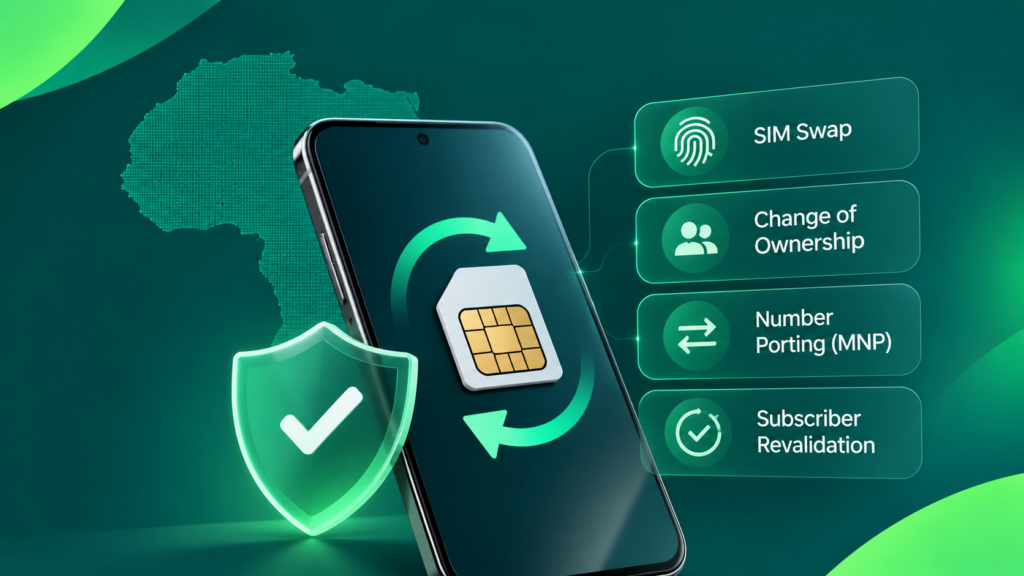
SIM swaps, changes of ownership, additional registrations, number port-ins and subscriber revalidation all require appropriate identity checks.
For example, a change of ownership should not simply transfer a number from one person to another. The new owner’s identity must be verified before the transfer is completed. Similarly, a subscriber requesting a SIM replacement must go through the required verification process.
The principle is straightforward: the same seriousness applied to registering a new subscriber should extend to every subsequent identity-related transaction.
Making identity verification part of every workflow
This requires more than a policy telling agents to verify subscribers. The technology supporting these operations must make the required checks part of the process.
BioSmartX, Seamfix’s telecom-native subscriber registration and identity lifecycle platform, applies biometric capture and NIMC verification to SIM swap workflows, using the same verification standard as new registration.
It also supports identity verification for changes of ownership, MNP port-ins and port-outs, and subscriber revalidation. Each workflow is structured to apply the relevant checks and maintain a record of the transaction.
BioSmartX also uses liveness detection to help prevent attempts to pass off a photograph as a live subscriber during facial capture.
For operators in Nigeria, these controls are particularly relevant to the NCC’s subscriber registration requirements. The specific regulatory obligations will differ across markets, but the need for reliable identity verification remains important.
Protecting the relationship beyond the first SIM
Subscriber identity management should not end once a SIM is activated. Every subsequent transaction is another opportunity to protect the subscriber and the operator.
For MNOs looking to strengthen identity verification across registration and lifecycle operations, the question is not simply whether subscribers are verified at onboarding. It is whether their identities remain protected throughout their relationship with the network.
BioSmartX helps make that possible.
Speak with Seamfix to request a BioSmartX demonstration and explore how your organisation can strengthen identity verification across the subscriber lifecycle.