Skip to content

Suggested

Language: English. French, Portuguese and Arabic are in preparation.

Discuss your project

Seamfix Staff Launch #AnActofKindness Initiative to put Smiles on the Faces of Children


In the words of Mariame Williamson, “In every Community, there is work to be done. In every nation, there are wounds to heal, In every heart, there is the power to do it”

As a people company, we thought of other ways to celebrate our 14 year anniversary and employees joined heads together to what birthed the initiative #AnActOfKindness. 

According to our Corporate Communications Rep, Deborah Babudoh, “We came up with the EMPLOYEE VOLUNTEERISM INITIATIVE themed #AnActOfKindness to touch as many lives as we can and also to awaken the volunteer spirit amongst us and raise awareness of the fact that the smallest things done with good intentions add up and have an important impact on all our lives, resulting in a healthier and happier future”

The long-term initiative is focused on SDGs 3 (Good Health and Well-Being) and we aim at executing this every year of our corporate anniversary. 

To start with our first outreach, our employees came out with the full force to donate a total amount of up to N400,000, also many toys, provisions and clothing items for all age ranges. 

The first outreach was done at the Vigilant Heart Orphanage where they donated a cash sum of N200,000 for the children’s educational needs, provisions, clothing items, toiletries and many more. Click here for more details.

Both children and the management of the orphanages expressed their gratitude to us for our support and donations. A representative from the Orphanage who also happens to be the Founder, “Mama” Fondly called Aunty May, stated “Seamfix, we are very grateful that you have come to celebrate 14th anniversary by supporting the orphanage and we want to assure you that these donations you have made will be used judiciously and strictly for the children that are in this orphanage. Thank you so much and God bless.”

To end the event, Our rep Frank Atube, ended with a presentation of cash donation to the founder and words of wisdom for the children. We also had the opportunity to play games with the kids. It was a memorable one and we look forward to doing this again!


Photo drop…


How Digital Identity Verification Technology Will Change Hiring Processes


In the pre-digital era, it was easier to verify a person’s identity – especially since most transactions and interactions happened face-to-face. However, today, businesses worldwide are undergoing their digital transformation and are starting to see the opportunities that digitalization can bring in terms of profits, operations, and market reach. Nonetheless, it is essential to be wary of the risks associated with this process, especially those that are not fully understood. 


Undoubtedly, the pandemic has fueled changes in workplace culture; most notably the rise in work from home. What was thought to be an initial emergency measure to stop the spread of the virus is now a clear picture of the future work environment. With over 74% of companies considering keeping their teams remote even after the pandemic has ended, it is crucial to start looking into these changes’ implications, especially those related to the hiring process. In a fully remote, fully digitalized recruitment process, digital identity verification can help you protect your company, hire the right talent for the job, and streamline the operation. 


What is digital identity verification?

A person’s identity is the ensemble of all those permanent and semi-permanent traits and claims that set an individual apart from others. Verifying these claims and features means putting in place a process to ensure that they are existent, true, and correct – and associated with a real human!

Digital identity verification – or remote identity verification – is a process that allows you to do so thanks to the implementation of a digital solution. This process might include the verification of a set of data including:

  • Permanent traits (date of birth, fingerprints, or ethnicity)
  • Semi-permanent data (eye color, name, height, and weight)

A digital solution can carry out all the necessary checks, including:

Solutions such as digital identity verification not only speed up the hiring process but also protect your company. From keeping data secure to preventing fraud, digital identity verification is an essential asset for companies looking to undergo a smooth transition into the world of remote teams. 


It will make remote hiring and onboarding easier.

As the pandemic hit, many companies quickly arranged for their teams to work remotely. However, it did not take long for organizations to understand that there were substantial benefits to a remote workforce. As employees design their home offices, companies can cut back on rent and have access to an international talent pool that is not limited by geographical boundaries. 

However, because of such a vast talent pool to choose from, remote working has brought several challenges to the surface, including finding a more suitable hiring and onboarding process. 

In fact, verifying a candidate’s identity and finding the right talent for the job without being able to meet applicants can be challenging. In turn, this can slow down the hiring process and represent a considerable waste of resources for most businesses.

Digital identity verification automatically verifies the candidate’s identity at the start of the screening process, which ensures that your recruiters will only meet with real and suitable candidates. 

Some of the benefits of this option include:

  • The screening process is entirely automated
  • Data entry mistakes are paired and highlighted to accelerate the screening process
  • Smartphone-based digital identity verification technologies can pull data from verified, government-issued IDs. 

Thanks to digital identity verification solutions, you won’t have to go manually through the documents and data submitted. In turn, this can increase the accuracy of the check, reducing risks and speeding up the hiring process. 


It will increase workplace security.

Remote working has its benefits – but it also comes with considerable risks! Since the start of the pandemic, companies have experienced an increase in cyberattacks and malware activity. These attacks come in various forms, including one of the so-defined biggest threats to human society: identity fraud. 

According to a recent survey conducted by the HR Research Institute in partnership with Sterling, 48% of respondents experienced identity fraud at least once, and 35% identified employment-related identity fraud as one of the fastest-growing trends for the next few years.

At the same time, with companies always relying more on data, breaches and loss can lead to irreversible damage from a financial and reputational viewpoint.

Therefore, it has never been more important to verify that candidates are who they say they are. And, for this, a visual analysis is no longer enough – which makes finding the right digital solution ever so vital! An efficient digital solution won’t only screen out fraudulent individuals but will also deter others from applying in the future, increasing the overall security level of your company. 


It will improve the candidate experience.

For candidates, the limbo between the first interview and the response moment can be nerve-wracking. And, there is nothing as unprofessional as a company that is late in updating a candidate and offers a poor communication channel. At the same time, a Glassdoor study found that 88% of new hires are dissatisfied with the onboarding process because of slow manual factors and lengthy timelines. 

Additionally, it is crucial to notice that the average cost-per-hire is around £3,000 – and over 49% of candidates drop out of the recruitment process after the last interview because of an unsatisfying experience with the company. When putting these statistics together, it is easy to see how important it is to streamline the hiring process, increase the level of candidates’ satisfaction, and secure the best hire.

Lastly, having a reliable digital identity verification in pace sends out a clear message that yours is a forward-thinking company that has embraced remote working and the latest technologies. 

Undergoing an initial digital verification also means that candidates won’t have to deal with inconveniences and corrections later on – and they are bound to be more trustworthy than the company has systems in place to prevent identity fraud.


Conclusion

Digital identity verification is a relatively new technology – but it is quickly becoming an unmissable asset for companies who wish to embrace digitalization and remote teams. Through digital identity verification, a recruiter can screen out fraudulent applicants, protect the company against identity theft and data loss, streamline the hiring process, and elevate the candidates’ experience. 


____________________________________________________________________________

About the writer:

Rebecca DiCioccio is the Marketing Manager at Paperform. Outside of work, Rebecca can be found exploring the outdoors or with a book in hand. Rebecca’s background in copywriting and a keen interest in SEO and digital marketing mean she understands the importance of staying up to date with the latest trends in a dynamic and ever-changing industry. 

An Urgent Call to Decentralize The Passport Application Process for Nigerians in the Diaspora: It’s Time to Make it Convenient.


It is interesting to note that Nigerians, both home and abroad, are tired of the routine of making long trips to apply for passports at Immigration offices or embassies abroad. Their next best option is risking the chance of getting swindled on the many fraudulent websites that pose as accredited online passport application sites. The question is what can be done about that?


There are thousands of Nigerians living in the diaspora all with different reasons for being there. Many seek work opportunities while others are students pursuing higher education. Some are there because they seek asylum or refuge from domestic or international violence. While abroad, these Nigerian citizens have to apply for Nigerian passports at the Nigerian embassy. For many, especially those who have limited knowledge of the terrain, access to Nigeria’s embassy can be an issue.

Besides the constraints not knowing the terrain poses, obtaining a Nigerian passport abroad has been famously labelled tedious and frustrating because of the distance to the embassy, transit time, long queues and waiting time, endless and futile visits, and there is also complaints of insolent treatment by the frustrated staff.

All of these have made the experience degenerate and discouraging. It becomes even more so when you realize that frauds now capitalize on this inconvenient process to build fake websites that lure people in with the promise of a convenient passport application and delivery process – fast and easy. Some people allow themselves to be vulnerable to these fraudsters because, well, they seek convenience.

Convenience is a major driver for humans especially in the 21st century because of everything technology has given us and still promises to give us. For this reason, it is disheartening to know that a lot of processes are still far from convenient. In the case of passport application, the problem stems from the centralization of these sites such that everything must be done here or nowhere else. 


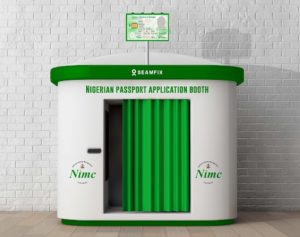
passport self service


The COVID-19 pandemic has shifted the dynamics of service delivery in every sector of the economy and shown us that there is immense benefit in flexibility — allowing a business, institution, agency, or any venture to grow beyond one physical space. Passport issuing centres will have to operate at maximum capacity to reduce the spread of Covid-19 and also ensure Nigerians can meet any deadlines they have for passport submission.

There is an urgent call to decentralize the passport application process for Nigerians in the diaspora by creating accredited application sites at accessible locations, away from the embassy, where applicants can walk in to apply, get their photos taken, submit their biometric data, and obtain their passports without having to make long trips or go through all the painful plights as cited above.

Just like what NIMC (National Identity Management Commission) has achieved in the diaspora, using a decentralized network of accredited agencies in accessible locations to enrol NIN for Nigerians abroad. Companies now apply to get a licence to set up enrolment centres, complete with trained enrolment agents at the ready. The process is even more seamless when Nigerians can book appointments that fit into their schedules from an online platform and make their way to the nearest enrolment centre.

Mirroring this process for passport application for Nigerian’s in the diaspora will make passport application more accessible to Nigerians no matter where they are — applicants from small towns will enjoy the same services as those in locations close to the embassy. These accredited sites will be manned by licenced trained agents who will work on behalf of the Nigerian Immigration Department. Empowered with mobile digital platforms, they will be able to register new applications on digital forms by collecting applicants’ data — biometric, demographic, signature, and image on the spot.


This decentralized approach will help reduce human traffic to the embassy, and staff will no longer have to deal with long queues; the experience will be pleasant for both applicants and staff as opposed to endlessly frustrating. 

The benefits can go even deeper to economic growth. Nigeria ranks top among countries with high diaspora remittance in Africa and the number could be even higher. According to a report by PWC, migrants remittance flow (Diaspora Remittance) will grow to $34.8 Billion by 2023, which will be 11 times more than our foreign direct Investments flows.

Moreso, the gross national product of Nigeria depends on the number of foreign funds that Nigerians in the diaspora transfer into the Nigerian economy. Hence, the ability to easily access immigration services, like passport application and renewal, can encourage Nigerians in the diaspora to sends funds home to invest in local opportunities thereby supporting economic development.

In forestalling kickbacks against this decentralised approach based on speculative problems that might arise, here are answers we can give:


  • Will my data be protected and kept private? 

The use of VPN technologies will ensure that data stays within the confines of a secure location and cannot be routed anywhere else.  On data security, the data will be secured using Standard Encryption methods for Data-At-Rest, Data-In-Transit and Data-In-Memory. Also, all data transition will be done via secure synchronization protocols; HTTPS or SFTP.


  • Will these agents be qualified? 

The agents will be trained, and if deemed worthy, will be issued licenses by the Nigerian Immigration Department to carry out enrolment effectively.


  • How will these enrollment devices be secured to protect my data? 

Several Mobile Device Management solutions exist that can ensure devices are used within business rules and data can only be accessed by authorized personnel.


passport application


Conclusively, passport application doesn’t have to be only for people with patience, time and money. Nigerians deserve an opportunity to exercise their rights to own a national passport and use it to travel whenever they please. Let this basic right not be hindered because of an inconvenient application process.

Convenience should no longer be an unattainable luxury. It’s about time passport application for Nigerians became easy and safe. We are ready to work with the Nigerian government to make this possible.


5 Key Ways to secure your Digital Identity from Identity Theft


As the world keeps evolving, technology continues to improve lives, and simplify business processes. Our personal data is everywhere, and providing information like passwords and account numbers to access online accounts is something many of us do almost every day. Unfortunately, whenever we provide our PII (Personal Identifiable Information), we are taking some level of risk that a criminal could steal and misuse it

Identity theft (also known as identity fraud) refers to crimes in which someone wrongfully uses someone else’s personally identifiable information (in a way that involves fraud or deception, usually for financial gain).

This practice can be achieved through forms of crimes, such as credit card fraud, account acquisition, phishing, hacking, social media fraud, impersonation, and ransomware attacks, and tech support fraud.  PII includes information like your date of birth, credit and bank account numbers, passwords, identification numbers, telephone numbers, and biometric data like fingerprints and scans. PII is anything that can be used to identify you.

Identity theft is a crime that grows every day, with someone becoming a victim essentially every day. It’s important to take steps to protect yourself or your business. Otherwise, these criminals can steal sensitive information about you and commit crimes.

Reducing the rate of identity theft depends primarily on how cautious you are in guarding your privacy. Here are the top 5 ways to securing your digital identity.


Learn to spot suspicious emails

From time to time, we all receive questionable emails. Start by examining the sender’s email address to confirm it’s from a legitimate domain name, or by spotting grammatical errors in the body copy.

Although some of these phishing scams are easy to identify, other phishing attempts in an email, social media sites or websites can look really legitimate. Avoid clicking any link sent to you. If the email says it’s from your bank and has all the right logos and knows your name, it may be from your bank – or it may not be. Instead of using the link provided, use a search engine to visit the site. This way,  you will know you landed on the legitimate site and not some mocked-up site.


Be Intentional about your Login information

According to the FTC, a secure password is unique, complex, and long. Never use the same logins across multiple sites. Avoid using passwords related to your birthday or any related initials. Remember that hackers can test up to 10 billion password combinations in seconds. Also, enable Two-Factor Authentications (2FA) which requires you to verify your identity by entering a unique code you receive via text message or email — this is equally important.


Look out for Hypertext transfer protocol Secure the “s” in “https” in any e-commerce address

No matter where you like to shop online, always pay attention to the URL address. The address should include an “s” after “http.” That S character is very important. It stands for “secure”. Any data transmitted is sent through an extra layer of security.

Before you shop from any site, make sure the site belongs to a reputable company. Review the site? Do they have a strong rating Do they use a secure, encrypted connection for personal and financial information?


Protect your device with strong security software

Most of the dynamic digital attacks take advantage of vulnerabilities in outdated operating systems. Know that reliable security software can protect your device.  Also, be sure that all operating system updates are installed.


Be careful with your private information

Legitimate websites or applications never request your private data via email or phone (passwords, card details, etc.). Hackers are always looking for an opportunity to extract such important information. Requests like that should be recognized with immediate suspicion.


7 Key Benefits of Process Automation in Growing Small Businesses


Business process automation isn’t only for large Companies; neither is it merely about robots. Small businesses also benefit from using software to create repeatable tasks with even fewer errors and human intervention. 

You can either manually program your automation processes or use Artificial Intelligence. Incorporating automation into your small business can help increase productivity and lower costs. It can also help generate leads, gather analytics, and improve customer satisfaction.


So if you’re thinking of how process automation can improve your small business, here is how:


Improves Email Marketing and Personalization

A small business can use process automation to auto-reply and personalize emails. When customers message you through the online contact form, you get an immediate response. A swift customer response makes it more likely for you to convert them into a lead. 

Email marketing is a handy marketing tool for both big and small businesses. Over 86% of marketers have seen a measured improvement from personalized email campaigns. Email marketing campaign ROI can be as high as 3,800%. So for every dollar, you spend, you can receive $38 in profits. However, it would help if you had a successful email marketing campaign to pull the numbers. Using automation for your emails can help.

Additionally, personalization is another essential aspect of any email marketing strategy. To be able to send out personalized emails, you need to have some information about the customer. With the use of AI technologies, you have a better idea of their interests and behavior. Such customer behaviors are based on how they interact with your platforms. Once you’ve gathered such information, you can send personalized emails using automated processes. Personalization involves addressing customers with their names and including relevant information. And it is bound to convert more potential customers to loyal customers.


Improves Customer Experience and Support

An increase in online sales has prompted businesses to upgrade their customer support platforms. Since online customers don’t have physical interaction, it’s essential to simplify sales processes. Several customer service processes, like orders, shipping, and post-sale, follow-up, can be automated. From these processes, you can collect data to fine-tune a consistent customer experience.

AI technologies, like chatbots, can enable you to reply to customer inquiries with ease. You also do not need any human interaction. For instance, a customer may create an account and have challenges logging in. A chatbot can guide them through the password or user name retrieval process. Such tasks are repetitive and, benefit from process automation. Thus, you can solve more customer problems, improve satisfaction, and customer retention.


Improve Collaboration within Departments

If you want a harmonized and productive workforce, team collaboration is essential. When several individuals are working on a project, they all need to be on the same page. But there are instances where delay occurs and likewise potential miscommunication. With the aid of automation and communication software, you can streamline your work. The project data shared is consistent. It’s also unambiguous, and open to all to make their inputs in real-time.

It is also excellent for small businesses because even with small office spaces, you can get more recruits to work remotely. The reason is that automation tracks team members’ responsibilities across geographic locations. Your small business can even go entirely virtual. Therefore, you get to save on overhead, such as rent space and office equipment.


Improves Cost and Savings

Sometimes, small companies incur a lot by hiring employees to perform labor-intensive tasks. You also find out that even with the large workforce, little value is added to the business. Automating repetitive and time-consuming tasks equals having a small yet productive workforce. Your employees don’t have to be scattered all over doing even mundane tasks.

They can focus on tasks that need creativity and innovation for product development. On the other hand, automation helps streamline time-consuming and repetitive tasks. While employees have more time to focus on their responsibilities, automation enhances productivity. In turn, you can lower your overhead cost and increase your profitability.


Improves Level of Accuracy While Minimizing Human Errors

Process automation enhances the accuracy of small business operations. You can eliminate human computation errors that may occur in tasks like invoicing, order processing, and inventory management. Sometimes, your team gets overwhelmed handling administrative and customer service-related tasks. Having to juggle so much work, they are prone to make errors that can delay projects.

With automation, small businesses cut down on potential errors. These errors could occur when it comes to repetitive and time-consuming processes. For instance, the essay writing review site Best Writers Online handles several clients’ information. The client information needs updates from time to time. Rather than enter such information manually and run the risk of having errors. You can make use of automated software to update that information automatically. And you are confident that the data is error-free and updated quickly.


Improves Compliance and Ensures Best Practice 

All small businesses must follow government policies like tax or customer information privacy. Also, other industry regulations and best practices need to be adhered to. For instance, licensing, systems updates, and ethical ways of doing business. Failure to comply with required practices could amount to paying a costly fine.

With process automation, you can ensure that workers remember to follow specific procedures. And likewise, comply with industry standards and regulations. You can also incorporate these rules into workflow management to ensure compliance at all levels.


Improves Data Gathering for Future Campaigns 

Small business automation enables you to gather data for future marketing campaigns. Useful customer information is collected from social media, surveys, and feedback forms. However, manually collating such data can be a challenge to handle and track.

With automation software like Google Analytics, you can gather and track data in real-time. The automated system you’ll need depends on your business type and long-term goals. 


Conclusion

There are several aspects of your small business that need a quick and simplified way of doing things. Process automation has several benefits for such areas in small businesses. With the right tools, employees can focus on providing quality products and services. While automated software takes care of other tasks that need repetitive imputations.

You can also provide a personalized and improved customer experience by up-scaling processes. Thus with budget-friendly software, you can improve on quality and increase your ROI.


7 Ways to Stay Calm During a Crisis


Recent happenings in the world,  such as the global pandemic COVID-19, have brought about a lot of panics. Unfortunately, severe anxiety and stress can result in a complete breakdown. This response can cause long-term damage to your health and lower your ability to perform optimally.

(more…)

4 Challenges Identity Verification System is Tackling in Nigeria.


In Nigeria, identity verification services have been useful in battling a lot of fraudulent activities and verification challenges today. Businesses, including the banking sector, are facing an increasing need to know if their customers are who they say they really are. They all need to be Know-Your-Customer (KYC)   compliant. These processes are in line with regulations which helps to validate who customers claim to be. 

The ability to verify an individual’s identity in real-time using a digital identity verification system is therefore very crucial. Thereby, this has tackled some key challenges here, in Nigeria;


The complex customer onboarding process

It is important that KYC and AML protocols are strictly followed. This is important during customer onboarding. Unfortunately, this slows down the onboarding process, and it also affects the user experience. We all want a customer-centric experience. Apparently, a great user experience strives to reduce any barriers that customers might have while simplifying processes

Due to this, lots of companies are turning to identity verification software to take care of the identity verification process. As a result, it speeds up the process as it keeps customer checks on file.  


Distrust amongst businesses and customers

Trust is ideally important in any business. We all know customers actively seek out businesses they can rely on. In an era of endless privacy breaches, running identity verification checks builds trust. This is important in what’s becoming an unsafe online world today. Failure to identify this need for trust between customers and businesses can damage a business’s reputation, and also its source of revenue. 

As online fraud rates increase, so are the digital needs of businesses. Nothing has been more important for businesses to be able to trust that their customers are who they claim to be. Again, this is where identity verification solutions in Nigeria come into play. Businesses do not just need to create a reliable process, but customers also expect a smooth, secure online experience as well.


Identity theft and fraud

An accusation of fraud can be the end of the road for a business, regardless of its size. As a result, organizations are increasingly leaning towards using models that embody identity verification. The models would have assessed suspicious users. Thus, this data can be used to create authentication levels. Furthermore, this is based on the risky possibilities of certain transactions.


Administrative burden

Having staff manually request and process ID documents can be a time-waster. This manual process can be completely avoided if a link is created directly from the user on your website to an online ID checking service. When done manually, there may be back-and-forth communication required over incorrectly formatted documents. But if the user is uploading it directly to the service, then validation is done instantly. This gives the user instant feedback if at all the format is incorrect, so they can retry.


Conclusion

As you know fraud rates are consistently growing yearly. We might likely continue to see this fraud rate increase as more businesses move online and go digital. As in this case may be, trust must be prioritized for businesses to succeed. This will not be possible without a  secure and reliable Identity Verification Technology.  Frauds and theft have scared businesses and customers. So it is important for businesses to implement a smooth identity verification process. A process that is customer-friendly and adheres to organizational guidelines. Bring into being,  it could ease fears, avoid costly fines and fraudulent concerns.


“Going Paperless Increases Productivity in Organizations ”: What this Means Exactly.


 A lot of companies today are not entirely paperless because they lack the key components needed in order to do so. Since going paperless is identified as a large investment you are probably wondering what the major benefits would be for implementing a solution like this? In this article, we would explain how going paperless increases productivity, reduces operational costs, improves customer service, creates an environmentally sound organization, and strengthens security.


 Now, It seems as though every time you’re looking for a particular document, it is at the bottom of the stack, and to make things worse, you would go through frustrations and searches before you get to that document. Sometimes you never seem to find this document. With that said, companies can easily spend multiple hours every week looking for paper files. This results in time, money, and productivity being wasted. With a data management system in place, this allows your organization to input, search for and retrieve data instantly. Once the data enters the system you can simply search a phrase, number, name, or date, and have access to the data instantly, thus increasing overall employee productivity.


Besides increasing productivity in the workplace, your organization will also improve the proficiency of the customer service unit. How many times in the day do you need to tell a customer to hold on so you can check on the portal or document, then get back to them? Sometimes you don’t end up finding the document immediately and this can take a full day or two before you have the information available. Not a good situation for the organization to be in. Now let’s rephrase this to “Not a problem at all, Let me pull out  your data/profile now and check it for you.” This results in better service meaning an increase in sales and more satisfied customers who can spread by word of mouth about the seamless quality of service of the organization.


Another great benefit of going paperless is reducing operating costs. Folders, paper files, and cabinets all occupy spaces or office rooms which end up being large expenses. As a matter of fact, most organizations specify that office space is second in costs right behind employee salaries. Scanning documents and inputting data into a document management system would eliminate this challenge and save organizations money. No longer would you have to search for documents in storage rooms or pay for wasted space that paper is taking up. You can now fill the space with more employees and turn an expense into a profit. Alleviating storage space also concurs with increasing productivity and improving client service. No longer will time be spent on searching for documents for data, therefore the chance of customer churning would decrease dramatically.


One of the important facets of a business is having the ability to protect and secure important documents/data. Paper is vulnerable to many outside factors with the main two being physical theft and destruction from fire, water, and other natural disasters that can likely occur. Important documents can also be subjected to unwanted employees viewing them. When you input this important information confidential you can limit and restrict access to certain employees. This ensures sensitive information is not being seen by all. With a data management platform in place, your organization can also adhere to compliance regulations easily. When information is needed you have access to it instantly, thus avoiding any penalties against regulatory bodies.


Most importantly, going paperless creates an environmentally sound organization. Digitizing documents results in fewer copies, less paper consumption, and it saves money on these expenses. 

In conclusion, going paperless improves the productivity of an organization. You can increase employee productivity, save a great deal of money by decreasing wasted space, eliminate unnecessary time searching for documents, ease compliance requirements, and improve client service.

Explore Bioregistra and go Paperless by creating your own digital form.

Major SIM Registration Challenges African Telecoms Face and the Solution

The telecommunications space,  like every other that rides on human identity can be riddled with identity theft and fraud. The SIM registration process makes it possible for telecoms and law enforcement agencies to identify mobile phone SIM card owners, track criminals who use phones for fraudulent activities, manage incidents such as loss of phone through theft, and ultimately help service providers know their customers better.


Now, with several mandates in different countries, the process involves a high level of verification — matching the mobile phone numbers with personal information of a subscriber including the subscriber’s photograph, name, date of birth, gender, address, details of valid identification documents, etc. all in a bid to prove they are who they say they are. This process, though optimized can still record loopholes.


These loopholes in the registration of mobile users, especially in African countries, is one of the major reasons for the lack of reliable identification document(s), and also why it is difficult for TELCOs to effectively support the government and law enforcement agencies to effectively track phone-related fraudulent activities.


Here are some fictional case studies based on true reports


  • The case of pretentious identities with no link to real humans

Bob was an agent hired by a large telco to capture subscribers a day. For each capture, he got paid N50, and if he met his daily target of 1000 captures or exceeded it, he was to be paid N200 per every 5 extra captures. Bob was as a hustler and so he devised a way to cheat the system by capturing filling out fake identities with the intent to pad his capture number. The system was so porous that he could go as far as capturing still pictures from magazines or even live animals and tying them to a particular identity. He met his cut every time and got his incentive. Years along the line, a crime is committed using one of the fake registered SIM Cards, with no link to Bob. Who is the culprit? Mr John Doe registered with the picture of Samuel L. Jackson.


  • The case of pre-registered SIM cards and the notorious swindlers

Remi and Mike were both notorious swindlers in the business of conning people out of their monies by using the famous strategy of calling and pretending to be anyone important – like an account manager from a bank in need of the customer’s full bank details, a distant estranged family member nosing for private information, or even a businessman with a profitable deal that will require a small deposit. This they do without leaving bread crumbs. How? They have met with an agent like Bob and purchased a bulk of pre-registered SIM cards (sold at a padded cost of course). With this, they are able to remain anonymous as the numbers are not tied to any real identity.


  • The case of compromised Integrity of captured data

A prominent man was kidnapped one day on his way from his hometown. The kidnappers kept constant communication with the family over the phone, making demands and threats. They were convinced they had done it right by hiding their number so it displays as ‘Private Number’ when they called. However, when the family involved the police and they, in turn, involved the network providers, the network provider was able to conveniently bypass their security system to see whose identity the SIM card was tied to. One big problem though, the data was useless — The captured image was unrecognizable, the fingerprints captured were mismatched and were not up to NFIQ standard, the text entry (full name and address) were inputted incoherently. That feat proved to be a wasted effort. 


  • The case of inconclusive biometric capture of handicapped individuals

A one-handed man walked into a roadside telecommunications service centre to re-register his SIM card, since it was said to have elapsed its registration period. Immediately, the workers all knew they were in for a long day. The registration process was hectic, long, and unfruitful as the process could not be completed without fingerprint capture. In the end, he was referred to the headquarters to file a complaint. This man feeling cheated was forced to seek the backdoor alternative to re-register his SIM.


What is the solution to issues like these?

<Learn more>   


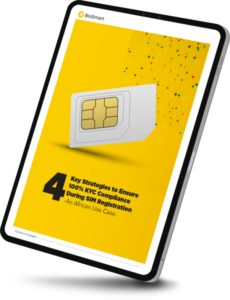
Free eBook: 4 Key Strategies to Ensure 100% KYC Compliance During SIM Registration –  An African Use Case.

This eBook will elaborate on real-life crisis faced by major telecommunications companies in Africa and the 4 ultimate key strategies they applied that still serve as long-lasting solutions today.


 <Download eBook>


Billable: The Future Of Revenue Management In The Public Sector Is Now


Revenue Management has been sparking up dynamic conversations in the tech space recently. This might have created a series of questions in your head wondering what it is about and how it can help your business. It’s definitely something you should be looking into or even implementing if you’re looking to improve your bottom line.


Many of us are familiar with revenue management tools in the private sector. Airbnb, Uber and Amazon are just a few big names that utilize revenue management to make the most out of their business. The public sector also has numerous opportunities to benefit from implementing revenue management – whether it’s used as a tool to maximize revenue or to capture lost opportunities.


The public sector is one of the biggest consumers of products and services. It has an enormous impact on the economy, easily outpacing any other single industry in its purchases. At the same time, many public sector organizations have been feeling the pressure to find new ways of increasing efficiency, reducing costs and plugging holes in the budget.


revenue management system


Revenue Management systems are just what these agencies need so that they can get their cost-saving measures underway without delay. Revenue Management is a growing sector with incredible advantages to both the public sector and private industries alike as a dynamic technique for maximising service capacity and revenue; ultimately delivering better customer experience and driving growth through the organization’s channel.


Revenue Management Platforms, on the other hand, enable organizations to optimize all aspects of the revenue collection process and quickly respond to regulatory changes. This platform challenges the resources in the importance of gathering information about the market so that they can be proactive and not reactive. 


In this blog post, we will discuss four ways that the public sector can benefit from a revenue management tool.


Person Holding Black and Gray Calculator


Improved Accuracy, Efficiency, and Timeliness of Collection: 

Revenue management tools have the ability to fully automate and standardize processes throughout the obligation lifecycle, this is critical to streamlining operating efficiencies, an authoritative source of integrated payer’s information, making it easier to respond to payers’ inquiries, resolve issues and carry out consistent intervention and audits. 


Enhanced Compliance: 

Revenue Management tools provide the public sector with the capabilities that enable them to adapt to authorized changes in a timely manner, increase revenue collections and apply proactive actions that reduce noncompliance, all while maintaining a high level of service. 


revenue collection


Automated Revenue Collection:

Revenue Management tools enable authorities to optimize the revenue collection process and efficiently manage any changes. It can help revenue authorities identify and collect this revenue without increasing the burden on compliant payers or adding to administrative costs. 


Optimized Documentation Process:

Revenue Management tools efficiently process the large volumes of documents that result from managing the transactions of a large constituency. Automatically generates audit reports which allow revenue authorities to view, document, and justify each step of revenue decisions to convert.


BILLABLE


The public sector needs to take advantage of what revenue management platforms have to offer to optimize its revenue collection process and increase its revenue stream. Revenue management platforms, like Billable, can help the public sector generate more revenue, streamline its processes and reduce costs.


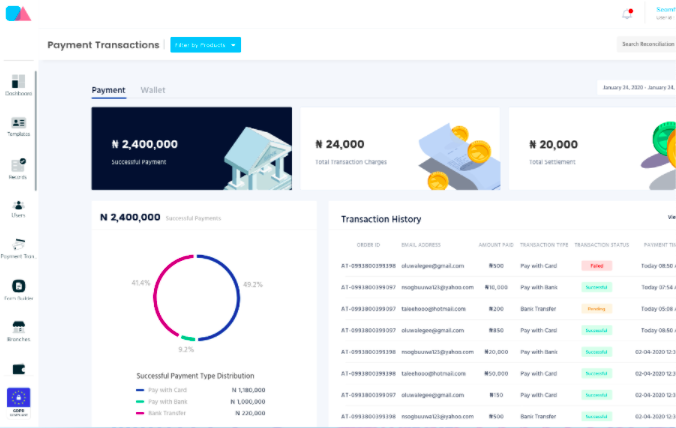
Billable is a forward-looking revenue management solution that offers detailed financial analytics, automated processes and cost-effective solutions. The above insights demonstrate that the public sector is already benefiting from high-quality revenue management platforms like Billable.


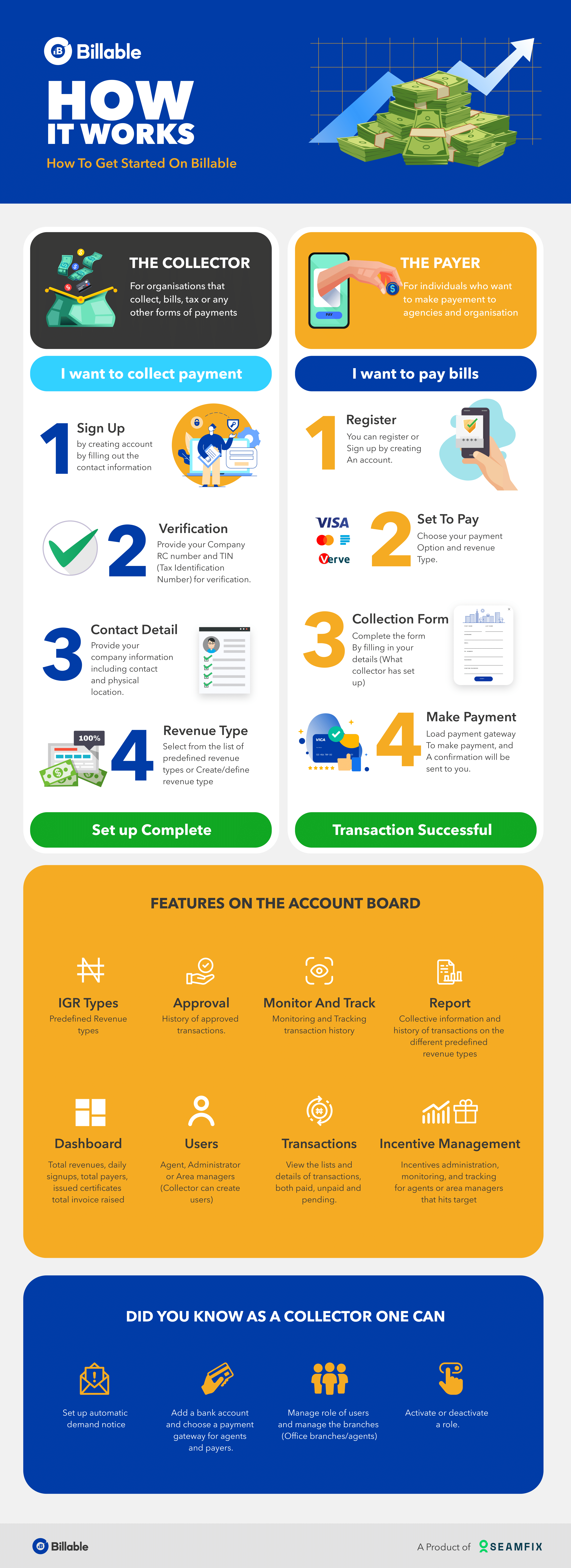
Here’s How Billable Works


billable - how it works


Interested in how this platform can be beneficial? Check out Billable to gain more insights.