The Insurance Identity Crisis: Why Fraud Thrives in Fragmented Insurance Markets
By Uyo 4 min read
Insurance Fraud Is Often Treated as a Claims Problem. It Is Actually an Identity Problem.
When fraud appears in insurance, the focus usually falls on suspicious claims, fake documentation, or payout abuse. The instinctive response is to strengthen claims review processes, introduce more controls, or expand fraud investigation teams.
But this approach addresses symptoms rather than causes.
In many insurance markets, especially across emerging economies, fraud is enabled much earlier, at the point where customer identity is established, verified, and maintained.
The real issue is structural fragmentation.
Each insurer maintains its own customer records. Verification standards vary across operators. Claims intelligence rarely extends beyond individual organizations. Regulators often depend on delayed reporting rather than real-time visibility.
This creates an environment where trust is fragmented by design.
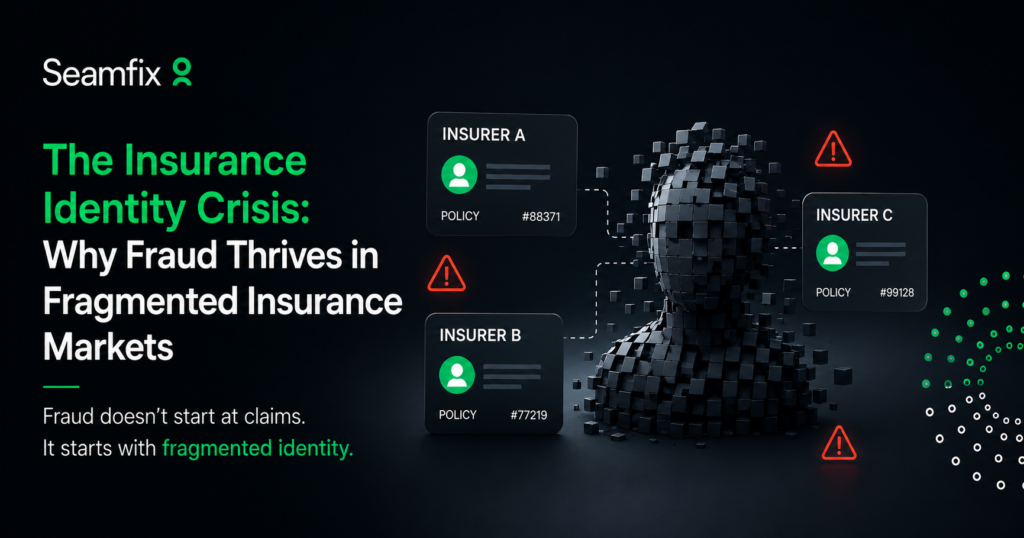
The same individual can appear differently across multiple insurers. A previously flagged actor can move from one provider to another undetected. Corporate entities may enter the ecosystem with weak verification of ownership or legal status.
Fraud becomes harder to prevent not because insurers lack controls, but because the market lacks shared infrastructure.
That distinction matters.
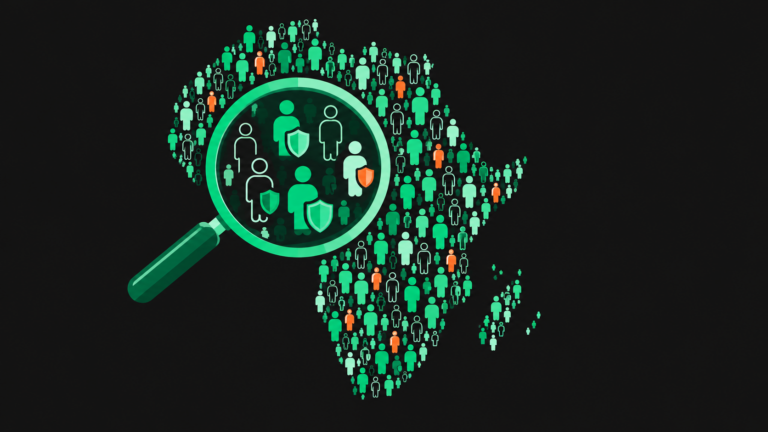
Nigeria’s insurance penetration remains below 1% of GDP despite compulsory insurance laws and decades of regulatory development. This suggests the challenge goes beyond product awareness or distribution. Trust, verifiability, and enforcement remain structural constraints.
Insurance cannot scale efficiently where identity itself is unreliable.
Why Fragmentation Creates Risk
Insurance depends on trust. But trust becomes difficult to enforce when every participant operates with a different version of reality.
- No Shared Identity Framework
Most insurance ecosystems do not operate with a universal customer identity layer.
That means a single individual may exist across multiple insurers under slightly different records, creating blind spots that make duplicate claims, repeated onboarding, and poor traceability far more likely.
Even well-run insurers are limited by what they can independently see.
- Claims Intelligence Is Isolated
Fraud detection becomes stronger when patterns can be observed across the market, not just within one company.
But where claims data remains siloed, suspicious behaviour that would be obvious at ecosystem level often remains invisible.
This forces insurers into reactive fraud management rather than proactive prevention.
- Weak Verification at Onboarding
Fraud prevention begins before policy issuance.
Yet in many cases, identity verification still depends on inconsistent document checks, manual reviews, or fragmented validation processes.
For businesses, the risks are even greater. Weak corporate verification creates room for fake entities, unclear ownership, and governance gaps that increase systemic risk.
The Cost Is Bigger Than Fraud
Fraud is only one consequence of fragmented infrastructure.
Operationally, insurers waste resources repeating identity checks, reconciling duplicate records, and resolving preventable verification issues.
For regulators, the impact is more severe.
Without centralized visibility, critical questions become difficult to answer in real time:
- How many active compulsory insurance policies exist today?
- Can duplicate claims across insurers be identified centrally?
- Are blacklisted participants consistently blocked?
- Can enforcement agencies instantly verify genuine coverage?
If the answer is no, then oversight remains reactive.
For consumers, fragmentation erodes trust. Fake policies, opaque claims processes, and weak verification damage confidence in the entire ecosystem.
And in insurance, trust is not a branding issue.
It is a market growth issue.
What Modern Insurance Infrastructure Should Look Like
Solving this problem requires more than tighter internal controls.
It requires shared infrastructure.
A modern insurance ecosystem should be built around four capabilities:
Verified Identity Infrastructure
Every individual and corporate participant should be tied to authoritative, trusted identity verification systems.
Shared Market Intelligence
Fraud signals, duplicate identities, and blacklisted actors should not remain isolated within individual organizations.
Real-Time Regulatory Oversight
Regulators need live visibility into policy issuance, claims behaviour, compliance activity, and ecosystem risk—not delayed snapshots.
Interoperability With Existing Systems
Modernization should strengthen insurer operations, not force disruptive system replacement.
This is how trust becomes scalable.
Where InsureGov Fits
This is precisely the infrastructure gap InsureGov was designed to address.
InsureGov functions as a shared insurance identity and supervision layer that connects verified participants, policy activity, and compliance oversight across the ecosystem.
At the identity level, individuals can be linked to persistent insurance identities anchored to authoritative national verification systems. Corporate entities can be validated through structured business verification workflows.
At the intelligence level, duplicate records, suspicious identity behaviour, and fragmented trust signals become easier to detect.
At the regulatory level, supervisors gain a centralized view of market activity rather than relying solely on fragmented reporting.
Crucially, InsureGov works alongside existing insurer systems rather than replacing them, making ecosystem-wide adoption more practical.
The Bigger Strategic Opportunity
Insurance is fundamentally a trust business.
But trust cannot scale where identity is inconsistent, intelligence is siloed, and supervision is delayed.
The strongest insurance markets are not simply better at processing claims or detecting fraud after the fact.
They are built on infrastructure that makes trust enforceable from the start.
That is the opportunity.
Not just to improve fraud detection, but to create a more governable, efficient, and trusted insurance ecosystem.
If your insurance ecosystem still relies on fragmented records, inconsistent verification, and delayed oversight, modernization is no longer optional.
The question is what infrastructure will define the future of trust.
Speak with us to explore how InsureGov can help build a more connected and resilient insurance market.