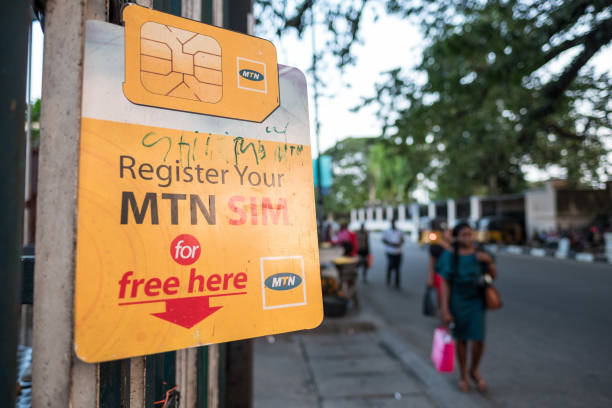
Every telecom operator in Nigeria runs a distributed registration network. Hundreds or thousands of agents, spread across retail outlets, kiosks, and dealer locations — each one processing registrations that create a legal compliance obligation under NCC Business Rules.
Each of those agents is also a point of failure.
Not because agents are bad. Because systems that give agents discretion over compliance-critical steps create a structural vulnerability that policy training cannot close.
Why Policy Training Is Not Enough
Most operators manage agent compliance through a combination of onboarding training, periodic refreshers, supervisor oversight, and disciplinary action for violations.
This approach has a fundamental problem: it works until an agent decides it does not.
An agent under pressure to hit registration targets skips the biometric re-capture when the first attempt is blurry. An agent at an unauthorized location completes a registration before the supervisor notices. An agent with blacklisted-NIN knowledge accepts a payment and processes the registration anyway. An agent shares their login credentials because it is easier than managing device access properly.
These are not hypotheticals. They are documented patterns in operator agent networks.
The question is not whether these things happen. They happen on every large agent network that relies on human judgment at compliance-critical steps. The question is whether your system lets them happen.
What the NCC Requires — and What It Examines
The NCC’s July 2025 Business Rules are specific about agent accountability. The requirements that directly affect agent network governance include:
- Device governance: Every device used for registration must be registered, assigned to a specific agent and location, and subject to immediate blacklisting. Unregistered devices cannot conduct registrations.
- Geo-fence enforcement: Registrations must be conducted within 25 metres of the agent’s registered outlet. GPS coordinates are verified at login and during registration.
- Daily device cap: No device may process more than 100 registrations per day. Devices hitting 50 registrations trigger automatic eyeballing routing for subsequent transactions.
- Registration hours: Agent login is blocked outside the 06:00–23:59 window.
- Full attribution: Every registration must be attributable to a specific agent, device, location, and timestamp — permanently, in an append-only audit log.
When the NCC audits a registration, it expects to pull the agent’s identity, the device ID, the GPS coordinates, the NIN, the biometric match score, the AI model version, and the routing decision — for any MSISDN, instantly. If your system cannot produce that, the agent accountability framework exists only on paper.
The Three Points Where Agent Networks Break Down
Point 1: The biometric step.
On legacy systems that collect data but do not enforce sequence, an agent can move through a registration without completing the biometric capture correctly. The system accepts whatever the agent submits. A blurred photo goes through. A skipped step goes through.
The result: registrations that fail NIMC verification later, eyeballing queues filled with legitimate subscribers who had one bad capture, and — in fraud cases — biometric steps that were skipped entirely.
In BioSmartX, the next screen does not appear until the current step is completed correctly. Biometric quality is assessed at the device, in real time, before the image goes to the verification pipeline. An agent cannot submit a bad capture and move on. The system physically prevents it.
Point 2: Unauthorized access and credential sharing.
A shared login credential means an unaccountable registration. An agent whose access was never revoked after leaving the organization is an open liability. An agent using a device that was not registered to them is untraceable.
BioSmartX addresses this through layered access controls: named user accounts with biometric login, device binding so that credentials alone are insufficient without the authorized device, immediate blacklisting for lost or compromised devices, and full attribution of every action to a specific user identity. A lost device is blacklisted in a single action — the next registration attempt from that device is blocked immediately.
Point 3: No real-time visibility.
Eyeballing queues build to thousands of cases before anyone checks the dashboard. A device processing 200 registrations in three hours is not noticed until end-of-day reporting. An agent operating 80 kilometres from their registered location is not flagged until an audit.
Operations teams managing compliance through retrospective reporting are always reacting. By the time a problem is visible in a daily summary, the damage is done.
BioSmartX surfaces registration throughput, eyeballing queue depth, agent activity, device status, and anomaly flags in real time. Not in tomorrow’s report. Now.
System Enforcement vs. Policy Enforcement
There is a clear dividing line between the two approaches to agent compliance:
Policy enforcement means agents are trained to follow the rules, supervisors periodically verify they are doing so, and violations are addressed after the fact. When the NCC asks whether a specific registration was conducted correctly, the answer depends on whether the agent followed their training that day.
System enforcement means compliance-critical steps are gates the system controls. The agent cannot skip the biometric capture because the next screen does not appear until it is done. The agent cannot operate outside their geo-fence because the system does not allow login from that location. The agent cannot approve their own borderline registration because the workflow does not give them that permission.
When the NCC asks whether a specific registration was conducted correctly, the answer is in the audit log — not in the agent’s memory.
BioSmartX is system enforcement. The NCC’s current requirements were designed for system enforcement. An operator relying on policy enforcement alone is not meeting the standard — and cannot demonstrate that they are.
What This Looks Like in Practice
At Glo Nigeria, BioSmartX governs a large-scale distributed agent network. Every agent is a named, authorized user. Every device is registered and geo-fenced. Every registration goes through the same non-skippable compliance sequence. Every action is recorded in the append-only SubscriberAudit table.
When an agent’s device is lost or compromised, operations blacklists it immediately — one action, immediate effect. The next registration attempt from that device is blocked. The attempt is logged.
When registration volumes spike on a specific device, the anomaly is surfaced in real time. Before the end of the hour, not the end of the day.
When the NCC asks for the complete registration record for a specific MSISDN, the compliance team produces it in minutes — agent identity, device, GPS coordinates, NIN verification outcome, facial match score, AI model version, routing decision. Complete. Tamper-proof.
The Question Worth Asking
If an agent on your network processed a fraudulent registration yesterday — how long would it take you to know? How long to identify which agent, which device, which location? How long to produce a complete, defensible audit record for the NCC?
If the answer is hours or days — or “it depends on whether the agent kept notes” — the agent governance gap is open.
BioSmartX closes it at the architecture level. Not through better training. Through a system that makes compliance the only path an agent can take.
See how BioSmartX governs agent networks at scale — request a demo.