One Accident, Two Claims: How a Shared Insurance Identity Could Expose Duplicate Claims
1. Executive Summary
A motorist submitted claims to two insurance companies for the same vehicle, accident and loss. Because both insurers operated separate claims systems, neither company could see that another claim had already been submitted for the incident. The documentation appeared complete, the claimant existed in each insurer’s database, and both claims progressed towards payment.
This is one of the limitations of fragmented insurance infrastructure: an insurer may conduct all its internal checks correctly and still miss fraud taking place elsewhere in the industry.
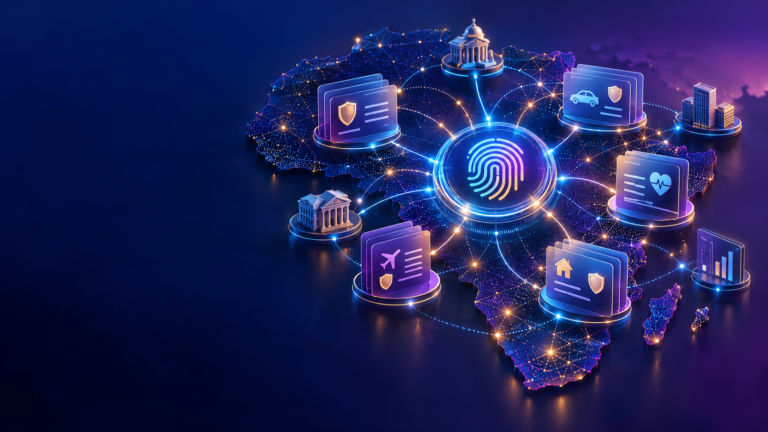
InsureGov addresses this problem by connecting verified policyholder identities, policies and claims through a Unique Insurance Identifier. At the point of claim notification, the platform can compare new claims with authorised industry records and flag similarities involving the claimant, vehicle, incident or supporting documentation.
In this scenario, the duplicated information would trigger an alert before either insurer completed payment. The claims would then be referred for investigation, helping the insurers prevent avoidable losses while protecting funds intended for legitimate customers.
2. Background / Introduction
Claims fraud does not always depend on a completely fabricated identity. In many cases, a real person, vehicle or policy is used to submit exaggerated, altered or duplicated claims.
An insurer can check a claimant’s records and confirm that the customer holds a valid policy. However, that insurer may not know that the customer has insured the same asset elsewhere, submitted a similar claim to another company, or reused documents from an earlier incident.
The Uganda proposal identifies identity-related fraud and cross-insurer “double-dipping” as significant industry risks. It also notes that fraud is becoming more sophisticated through altered records, forged digital signatures, synthetic documents and AI-generated materials.
These risks are difficult to manage when policy and claims records remain distributed across separate organisations.
3. Problem Statement / Challenge
Following a motor accident, a policyholder submitted a claim to ACB Insurance. The submitted documents included proof of insurance, photographs of the damaged vehicle, a police report, repair estimates and identification documents.
The same individual then submitted another claim to XYZ Insurance using substantially similar information.
Within their respective systems, both claims appeared credible. Each insurer could confirm the existence of a policy and the identity of the customer. What neither could see was the relationship between the two submissions.
The lack of shared visibility created several risks:
- Both insurers could pay for the same loss.
- Investigators could spend considerable time reviewing claims individually.
- Repeated fraud could remain undetected across the market.
- Claims leakage could increase premiums for legitimate customers.
- Regulators would have limited visibility into coordinated fraud patterns.
The problem was not simply the absence of documents or internal controls. It was the absence of a trusted industry-wide mechanism for connecting identities and claims.
4. Solution / Approach
InsureGov would establish a common identity reference for the claimant through a Unique Insurance Identifier. This identifier would connect the verified individual to authorised policy and claims records across participating institutions.
When the first claim was submitted, the insurer would verify the claimant at the point of first notification of loss. InsureGov would confirm the individual’s identity and associate the claim with the person’s Unique Insurance Identifier.
When the second claim was received, the platform would compare its key attributes with existing records. These could include:
- The claimant’s verified identity.
- Vehicle registration or asset details.
- Date and location of the incident.
- Policy coverage periods.
- Photographs and supporting documents.
- Repair estimates and service-provider details.
- Previously submitted claims connected to the individual.
The appearance of matching or unusually similar information would generate a risk alert. The system would not automatically declare the customer guilty of fraud; instead, it would provide the participating insurers with evidence requiring additional investigation.
This allows claims teams to concentrate their effort on high-risk cases rather than treating every claim as equally suspicious.
5. Results & Impact
In this illustrative scenario, the alert would allow both insurers to pause payment and jointly investigate the duplicated claim. The potential impact would include:
- Prevention of two payments for a single insured event.
- Faster identification of cross-insurer claims fraud.
- Reduced dependence on manual and institution-specific searches.
- Better use of claims-investigation resources.
- Stronger intelligence on recurring fraud patterns.
- Greater protection of legitimate claims funds.
- Improved regulatory visibility into systemic claims risks.
A live implementation should measure the number and value of duplicate claims identified, the percentage of claims linked to verified identities, investigation turnaround time, false-positive rates and the value of suspicious payouts prevented.
The proposal cites estimated premium leakage of 10%–25% from identity-related fraud as part of the wider industry challenge. This should not be presented as an amount already recovered or prevented by InsureGov. The actual impact would need to be established during a controlled pilot and measured against an agreed baseline.
6. Lessons Learned / Conclusion
An insurer can have effective internal controls and still remain vulnerable to fraud that crosses institutional boundaries. When every organisation sees only its own customers and claims, coordinated activity can appear legitimate.
InsureGov introduces the shared identity and intelligence infrastructure required to identify those connections. By linking claims to verified policyholders and comparing authorised records across the ecosystem, insurers can detect suspicious activity earlier and make better-informed payment decisions.
The wider lesson is clear: industry-wide fraud requires industry-wide visibility.