Skip to content

Suggested

Language: English. French, Portuguese and Arabic are in preparation.

Discuss your project

Strengthening Diaspora Engagement Through Digital Passport Renewal Systems in Francophone Africa

In cities like Paris, Brussels, and Montreal, large communities from Francophone Africa maintain strong ties to their home countries.

They contribute economically through remittances, invest in businesses, and often act as informal ambassadors, bridging local and global networks. Despite this, their interaction with government services is often limited to moments of necessity.

Passport renewal is one of those moments.

And for many, it is not a straightforward experience.

Distance Should Not Define Access

For citizens living abroad, access to government services is shaped by geography.

Consular offices may be located in major cities, requiring significant travel for those living farther away. Appointment availability can be limited, and processes are often time-consuming.

The result is a system where access is technically available, but practically constrained.

This creates a disconnect.

Citizens who are otherwise digitally engaged—managing finances, businesses, and communication online, are required to revert to manual processes for something as fundamental as identity renewal.

A Missed Opportunity for Engagement

Diaspora communities represent more than just a population segment. They are a strategic asset.

According to the World Bank, remittance flows to Sub-Saharan Africa consistently exceed $50 billion annually. In many Francophone countries, these flows form a significant part of national income.

But engagement is not only economic.

Strong connections between governments and their diaspora can support:

  • Investment and entrepreneurship
  • Knowledge transfer
  • Cultural and diplomatic influence

When access to services is difficult, these connections weaken. Administrative friction becomes a barrier to broader engagement.

Digital Passport Renewal as a Practical Step Forward

Improving diaspora engagement does not always require large-scale reform. Sometimes, it begins with improving a single, high-impact service.

Passport renewal is one such service.

By enabling citizens to renew their passports remotely, governments can:

  • Reduce reliance on physical consular visits
  • Improve accessibility across different regions
  • Shorten processing timelines

More importantly, they create a service experience that reflects how citizens already live, digitally, globally, and with expectations of convenience.

What Effective Systems Look Like

For digital passport renewal to deliver value, certain elements must be in place.

Accessibility across borders

Citizens should be able to initiate and complete the process regardless of their location.

Secure identity verification

Biometric validation ensures that remote processes remain aligned with national security standards.

Clear and guided user journeys

Users should be supported at every step, reducing errors and incomplete applications.

Integrated processing

From application to payment to approval, the experience should be seamless.

These elements are not theoretical. Platforms such as ePass by Seamfix demonstrate how governments can implement these capabilities in a practical, scalable way.

Aligning With Regional Digital Agendas

Across Francophone Africa, there is growing momentum around digital transformation.

Governments are investing in e-governance frameworks, digital identity systems, and improved public service delivery. In this context, passport renewal is not an isolated service—it is part of a broader shift toward modern governance.

By digitizing passport renewal for diaspora populations, governments can:

  • Align with national digital strategies
  • Demonstrate progress in service delivery
  • Build confidence in other digital initiatives

It becomes both a functional improvement and a visible signal of change.

A More Connected Future

The relationship between governments and their diaspora is evolving.

As citizens become more globally distributed, expectations around access and service delivery continue to change. Governments that adapt to this reality are better positioned to maintain strong, ongoing relationships with their citizens abroad.

Digital passport renewal is not a complete solution, but it is a meaningful step.

It simplifies access, reduces friction, and reinforces a sense of connection.

And in doing so, it shifts the experience from one of inconvenience to one of continuity.

In conclusion…

For many citizens abroad, a passport is more than a document. It is a link to home.

Ensuring that this link remains easy to maintain is a reflection of how governments value and engage their global communities.

As Francophone African governments continue to strengthen their digital public service infrastructure, the opportunity to improve diaspora engagement is both immediate and strategic. Passport renewal, as a high-demand and high-visibility service, offers a practical entry point for this transformation.

The challenge now is execution.

Implementing secure, scalable, and user-friendly systems requires partners with both technical expertise and a deep understanding of public sector realities. Platforms like ePass by Seamfix are already supporting governments in this transition, enabling remote access to passport services while maintaining the integrity, security, and structure required for national identity systems.

For countries seeking to modernize service delivery and strengthen connections with their citizens abroad, the tools are already available. What remains is the decision to adopt and scale them.

Ready to scale passport renewal for your citizens? Talk to our sales team: https://seamfix.com/contact-us-2/ 

Designing Trust in Digital Passport Renewal: What Governments Must Get Right

A citizen sits at home, halfway through an online passport renewal.

They have entered their details, uploaded documents, and reached the payment stage. Then they pause.

Questions begin to surface quietly:

Is this secure?
Why is the fee this amount?
What happens after I pay?

That moment of hesitation is where many digital public services succeed or fail.

Because in government-led digital platforms, trust is not assumed, it is earned, step by step.

When Technology Works, But Adoption Doesn’t

Across many countries, investments in digital platforms have increased significantly. Systems are being built, portals launched, and services digitized.

Yet adoption does not always follow.

The issue is rarely technical capability. More often, it is a gap between what the system does and how confident users feel while using it.

A platform may be secure, compliant, and fully functional—but if the experience feels unclear or risky, users disengage.

In passport renewal, this is particularly critical. Citizens are not just filling a form; they are:

  • Submitting sensitive identity information
  • Uploading official documents
  • Making payments tied to a government process

Every step must reinforce confidence.

Trust Is Built in Layers

Trust in digital passport renewal is not a single feature, it is the result of several elements working together.

1. Security that is visible, not just implemented

Security is foundational, but it must also be communicated.

Biometric verification, encrypted data handling, and compliance with national identity standards are essential. However, if users do not understand that these safeguards exist, they will still hesitate.

Clear cues, messages, confirmations, and structured flows, help make security tangible.

2. A process that feels guided, not uncertain

One of the most common reasons for drop-off in digital services is confusion.

When users are unsure about:

  • What information is required
  • Which document to upload
  • What step comes next

They pause, or abandon the process entirely.

A well-designed system anticipates these moments and removes ambiguity through:

  • Step-by-step guidance
  • Clear instructions at each stage
  • Progress indicators that show how far the user has come

Clarity reduces cognitive effort, and with it, friction.

3. Transparency at the point of payment

Payment is where trust is tested most directly.

If a user encounters a fee without sufficient context, hesitation is almost guaranteed. Questions about cost, refunds, and processing often surface at this stage.

To maintain confidence, governments must ensure:

  • Fees are clearly explained before payment
  • The purpose of the cost is transparent
  • The outcome after payment is well defined

When users understand what they are paying for, they are far more likely to complete the process.

4. Consistency across the entire journey

Trust can be weakened by inconsistency.

If one part of the system is clear and another is confusing, users begin to question the reliability of the entire process.

An effective digital passport renewal platform should feel cohesive—from the first screen to final submission. Every interaction should reinforce the same level of clarity, security, and professionalism.

The Case for Integrated Systems

Many of the challenges in digital passport renewal arise from fragmentation.

When identity verification, document submission, payment processing, and application tracking are handled across separate systems, the user experience becomes disjointed.

Integration addresses this.

By bringing all components into a single, structured workflow, governments can:

  • Reduce user confusion
  • Improve completion rates
  • Simplify internal operations

Platforms such as ePass by Seamfix illustrate how this integration can be achieved—combining biometric identity verification, guided user journeys, and secure processing into one cohesive environment.

Trust as a Design Principle

The most effective digital public services are not those with the most features, but those that feel the most reliable.

This reliability is not accidental. It is the result of deliberate design choices:

  • Anticipating where users may hesitate
  • Providing clarity before confusion arises
  • Reinforcing security at critical points

Institutions like the World Bank continue to emphasize that trust is central to the success of digital public infrastructure, particularly in identity systems where accuracy and security are paramount.

Moving From Functionality to Confidence

As governments continue to digitize services, the focus must shift from simply making systems available to ensuring they are fully usable.

A working platform is not enough. Citizens must feel confident using it.

In passport renewal, where identity, mobility, and national systems intersect, that confidence becomes even more critical.

Because at the point where a user decides whether to proceed or stop, it is not technology that makes the difference. It is trust.

As governments continue to digitize identity services, trust will remain the defining factor between adoption and abandonment. Security, clarity, and consistency are no longer optional, they are foundational.

Delivering on these expectations requires more than isolated improvements. It requires systems that are designed from the ground up to support secure, guided, and integrated user experiences.

Solutions such as ePass by Seamfix reflect this approach in practice, combining biometric identity verification, structured workflows, and secure payment processes within a single platform. By aligning technical capability with user-centered design, they demonstrate how governments can deliver digital services that citizens not only use, but trust.

In the end, the success of digital passport renewal will not be measured by availability alone, but by the confidence it inspires in those who rely on it.

ePass by Seamfix offers this confidence, seamlessly. If you would like to see how it works, talk to our sales team here: https://seamfix.com/contact-us-2/ 

Why Passport Renewal for Citizens in the Diaspora Is Broken and How Governments Can Fix It

On a cold morning in Paris, an Ivorian professional takes a day off work, not for rest, but to renew a passport.

The process starts weeks earlier: securing an embassy appointment, gathering documents, double-checking requirements that are not always clearly stated. On the day itself, there is travel across the city, time spent waiting, and uncertainty about whether everything has been done correctly. If something is missing, the process starts again.

This experience is not unique. It is shared by students in Montreal, entrepreneurs in Abidjan, and families in Brussels. For millions of citizens living abroad, passport renewal is not a simple administrative task, it is an interruption that is logistically challenging.

And yet, in an era where banking, healthcare, and even voting are becoming increasingly digital, passport renewal for diaspora populations remains, in many cases, tied to physical systems.

The Disconnect Between Policy and Reality

Governments across the world have made strong commitments to digital transformation. National strategies often emphasize accessibility, efficiency, and citizen-centric service delivery.

But for diaspora services, there is still a noticeable gap between intent and execution.

Embassies and consulates continue to operate under pressure:

  • Limited staff handling high volumes of requests
  • Physical infrastructure that cannot scale with demand
  • Processes that rely heavily on manual verification

At the same time, citizens face their own constraints:

  • Long travel distances to consular offices
  • Unclear or inconsistent requirements
  • Lost time and income due to in-person visits

This system works, but it’s not efficient, neither is it equitable. 

The Hidden Cost of “Business as Usual”

When passport renewal systems remain largely manual, the cost is not always immediately visible, but it is significant.

For governments, it shows up as:

  • Operational bottlenecks that slow down service delivery
  • Increased administrative overhead
  • Difficulty in scaling services to meet diaspora demand

For citizens, the cost is more personal:

  • Time lost navigating complex processes
  • Financial burden from travel and missed work
  • Frustration that erodes trust in public institutions

Over time, these inefficiencies compound. What begins as a procedural inconvenience becomes a barrier to engagement.

What a Modern Passport Renewal Experience Should Look Like

If governments were to design passport renewal today, from first principles, the experience would look very different.

It would be:

Accessible from anywhere

Citizens should not need to be physically present to initiate or complete a renewal. Geography should not determine access to essential services.

Guided, not confusing

Each step should be clearly explained. Users should know exactly what is required, what comes next, and how long the process will take.

Secure by design

Identity verification, especially through biometrics, must be embedded into the process to maintain trust and compliance.

Transparent in cost and process

Users should understand what they are paying for, and why. Ambiguity, especially around fees, creates hesitation.

Integrated end-to-end

From application to payment to processing, the experience should feel like one continuous journey, not a series of disconnected steps.

A Shift That Is Already Underway

Encouragingly, this transformation is not theoretical.

Institutions such as the World Bank have consistently emphasized the role of digital public infrastructure in improving service delivery, particularly in identity systems.

Some governments are already taking steps in this direction, adopting platforms that enable remote applications, streamline verification, and reduce reliance on physical touchpoints.

Solutions like ePass by Seamfix demonstrate how this can be implemented in practice, bringing together secure identity verification, structured workflows, and user-friendly interfaces into a single system designed for real-world use.

Beyond Convenience: A Strategic Imperative

It is easy to frame digital passport renewal as a matter of convenience. But for governments, the implications are far broader.

Improving access to passport services for citizens abroad:

  • Reduces pressure on embassies and consulates
  • Improves operational efficiency
  • Strengthens trust in public institutions
  • Enhances the country’s global image

Most importantly, it signals that governments are adapting to the realities of a global population.

The Way Forward

The question is no longer whether passport renewal can be digitized. The technology exists, and the demand is clear.

The real question is how quickly governments are willing to move.

For countries with large and economically active diaspora populations, the opportunity is immediate. By rethinking how passport services are delivered, governments can remove long-standing friction points and create a more inclusive, efficient system.

Because for the citizen in Paris, or Montreal, or Brussels, passport renewal should not require disruption.

It should simply work.

As governments rethink how to serve increasingly global populations, the need for more accessible and efficient passport renewal systems becomes difficult to ignore. The limitations of manual, location-dependent processes are clear, and the expectations of citizens continue to evolve.

This is where implementation becomes critical.

Solutions like ePass by Seamfix are already enabling governments to move from fragmented, in-person processes to structured, digital experiences that support remote applications, secure identity verification, and end-to-end processing. By reducing reliance on physical infrastructure and guiding users through each stage of the journey, such solutions help address both operational inefficiencies and user frustration.

For governments looking to modernize diaspora services, the path forward is not theoretical. It is already being built, and deployed.

Request a demo here. 

The Pros and Cons of Biometric Authentication: What IT Professionals Need to Know

According to Cobalt, the cost of cyber threats is projected to rise to $10.5 trillion by the end of this year. These threats are becoming more innovative. Thankfully,  biometric authentication offers a promising solution to help improve the security of your organization. 

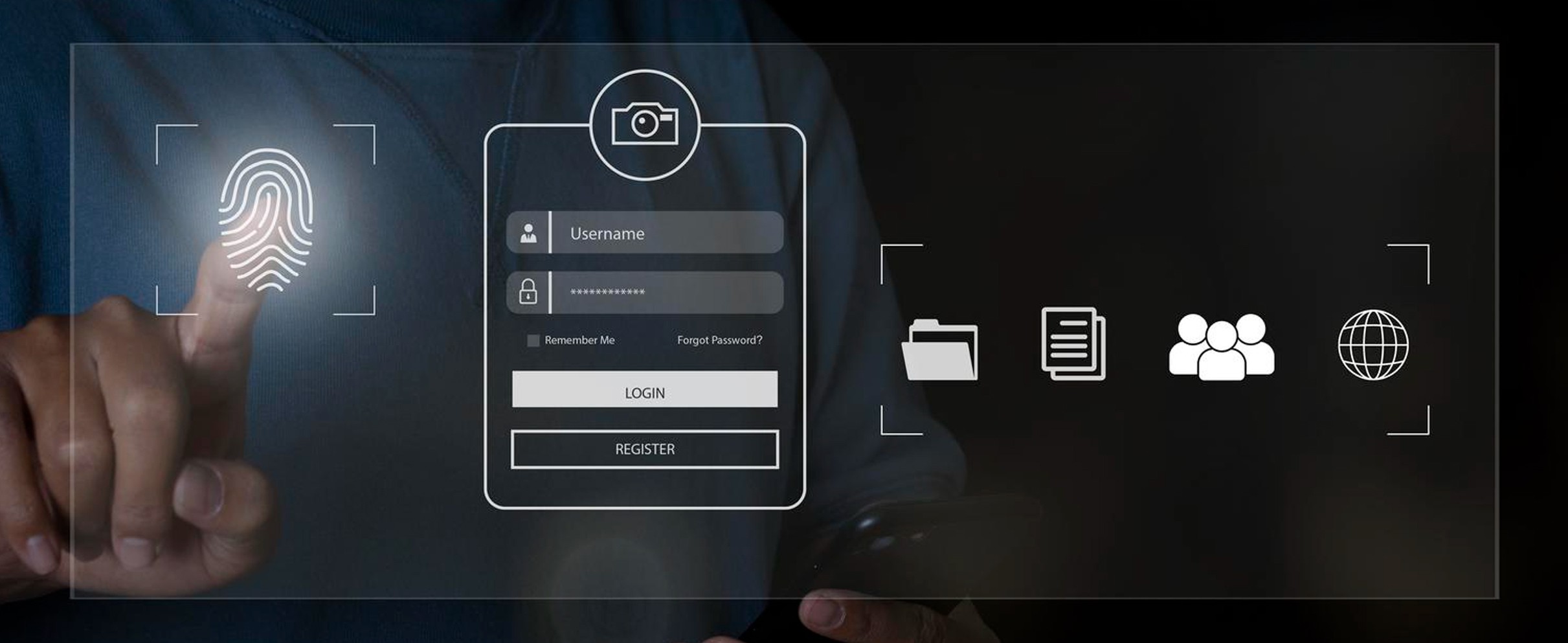
Biometric technology uses physical or behavioral characteristics that are unique to every individual. Characteristics like fingerprints, facial recognition, or  even voice patterns. This authentication system stands as a compelling alternative to traditional passwords. But is it the ultimate solution you have been seeking? 

Let’s discuss some pros and cons so you can decide.

Pros of Biometric Authentication

1. Unlike passwords or PINs that can be guessed or stolen, biometric data is unique to each individual. This makes it significantly harder for cybercriminals to replicate or compromise. For example, a hacker might crack a weak password, but duplicating someone’s fingerprint is far more challenging.

2. Biometric authentication takes out the need for your staff to  remember complex passwords or even carry physical tokens. Just by scanning their  fingerprint or face, they can quickly and seamlessly access their devices or accounts. This is particularly valuable when you are managing multiple systems daily.

3. These systems ensure that access into platforms and tools is undeniably tied to an individual. This non-repudiation capability can strengthen audit trails, making it clear who accessed sensitive data and when.

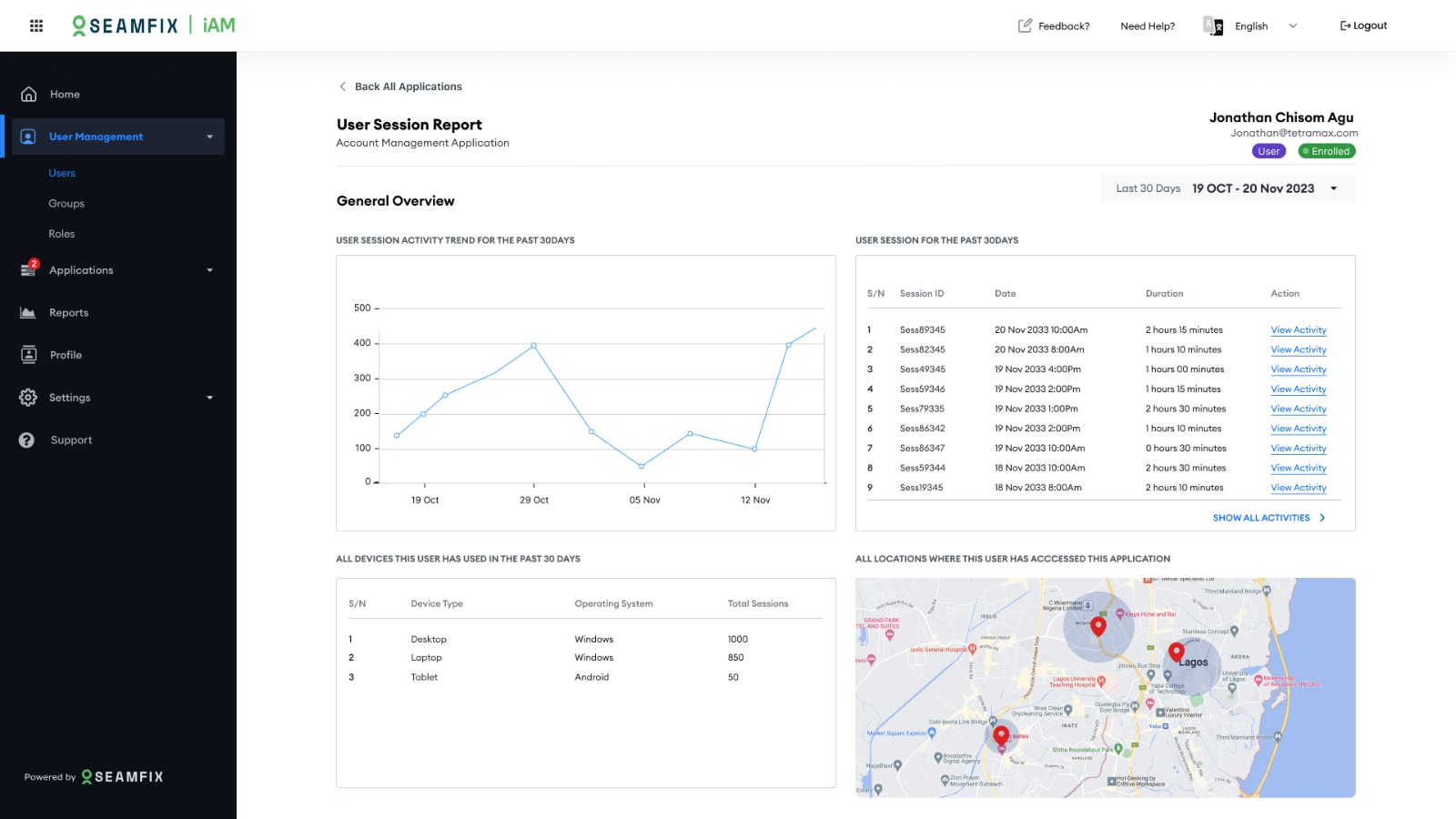
4. Modern biometric technologies like the Seamfix iAM are increasingly easy to integrate with existing IT systems. From multi-factor authentication to role-based access control, biometrics can complement other security measures, providing layered protection for businesses.

Now the Cons?

1. Storing biometric data raises significant privacy issues. If a biometric database is breached, the stolen data cannot be changed—unlike a password. This poses a long-term risk, as individuals’ biometric traits are permanent.

2. Implementing biometric systems can be expensive, especially for smaller organizations. Costs include purchasing hardware (like fingerprint scanners) and software, as well as ongoing maintenance.

3. Some regions have strict regulations governing the collection and use of biometric data. For instance, the GDPR in Europe and the CCPA in California impose stringent requirements, making compliance a potential challenge for IT teams.

Now, should IT Professionals Adopt Biometrics Technology?

While biometric authentication offers undeniable benefits, it’s not a one-size-fits-all solution. IT professionals should adopt some best practices, especially concerning privacy and implementation costs:

  • Ensure that the stored biometric data of your staff is encrypted to prevent unauthorized access from malicious persons.
  • Combine biometrics with other authentication methods for a more robust security setup.
  • Conduct training sessions for your employees on the proper use, limitations and importance of these systems.
  • Keep biometric hardware and software up to date to address vulnerabilities and improve accuracy.

Biometric authentication has changed the way we approach security. However, it is crucial to address its drawbacks, like privacy concerns and implementation challenges before fully adopting it.

Ultimately, the benefits of biometric authentication far outweigh its drawbacks. You can significantly improve your organization’s security by adopting a biometric system like the Seamfix iAM.

Do you want to get on board with Biometric Authentication for your systems?

Visit Seamfix.com/iAM  to get started or click on the link below to book a demo

[Book A Demo]

How Governments can Overcome Challenges in Self Service Implementation for Access to Public Services

It was supposed to be a simple process. Citizens would enroll for public services, get verified instantly, and access what they needed without any problems. But for government agencies, the reality looked very different.

A new self-service platform had just launched, promising to eliminate long queues and paperwork. Yet, adoption of this platform was slow. Citizens struggled with the system, fraudulent applications were on a high side, and outdated government databases couldn’t keep up. The very solution that was meant to simplify service delivery was turning into a logistical nightmare.

The Biggest Challenges of Self-Service Implementation

  1. Low Citizen Adoption Many people either lack the digital skills to navigate self-service platforms or don’t trust online systems with their personal data. Without widespread adoption, the entire system falls flat.
  2. Security & Fraud Risks Digital platforms introduce new vulnerabilities—identity theft, fake applications, and system breaches. Fraudsters find loopholes, and without proper security, governments risk losing public trust.
  3. Legacy System Integration Most public sector agencies still rely on outdated infrastructure that can’t communicate with modern self-service platforms. This leads to inefficiencies, duplicate records, and failed verifications.
  4. Data Accuracy & Verification Issues Poor-quality submissions—blurry photos, incorrect information, duplicate records—create bottlenecks, forcing manual reviews and slowing down service delivery.
  5. Resistance from Internal Stakeholders Government employees used to manual processes may resist digital transformation, fearing job displacement or increased workload from troubleshooting new systems.

You are still reading up till this point because I have mentioned pain points that you most probably relate to. Now let’s discuss how Seamfix helps in Overcoming Common Challenges in Self-Service Implementation

How Seamfix Helps Overcome These Challenges

  1. Driving Citizen Adoption with User-Friendly Solutions Seamfix’s Self-Service Enrollment platform simplifies onboarding. With mobile-first design and multilingual interfaces, even first-time users can apply for services with ease. 
  2. Advanced Security & Fraud Prevention Seamfix integrates AI-driven fraud detection, biometric authentication, and liveness detection to prevent impersonation and document forgery. Governments can be rest assured that only genuine applications get processed.
  3. Seamless Integration with Existing Systems With API-driven architecture, Seamfix connects modern platforms to legacy databases, enabling smooth data flow between systems. This ensures faster approvals and prevents duplicate records.
  4. Automated Data Quality Checks OCR-powered document extraction, AI-enhanced facial matching, and real-time error detection ensure that only high-quality data enters government databases, reducing rejection rates and speeding up processing.
  5. Engaging Internal Stakeholders in Digital Transformation Seamfix provides training and support to help government employees transition smoothly. With workflow automation and role-based access control, employees spend less time on manual verification and more on strategic tasks.

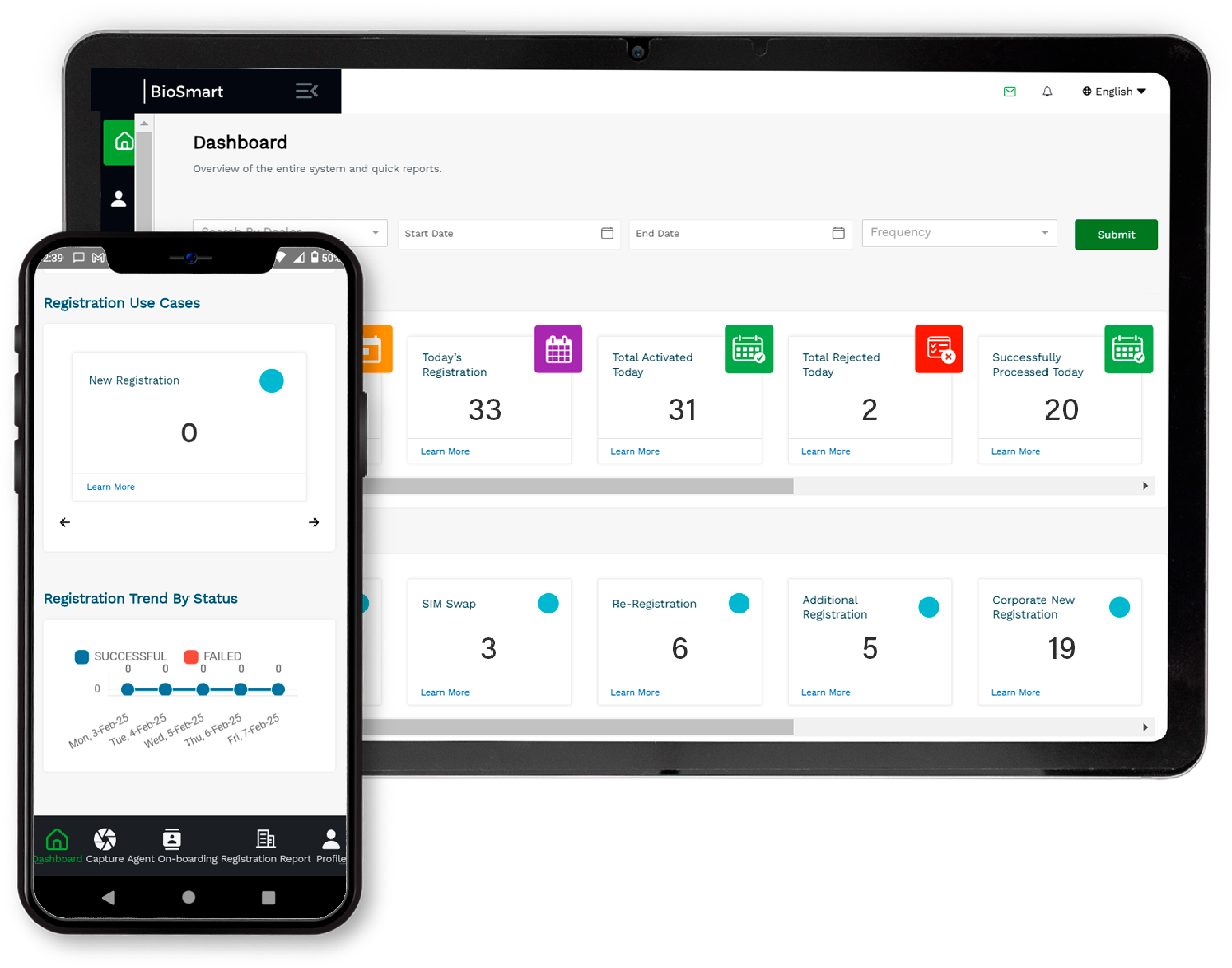
Self-service platforms are the future of public services, but the problems associated with implementation most definitely can not be ignored. By leveraging AI-driven security, seamless integrations, and user-friendly enrollment, Biosmart X from Seamfix ensures governments can roll out digital services successfully without the headaches.

The shift to self-service doesn’t have to be a stressful process. With the right partner, governments can improve efficiency, reduce fraud, and enhance citizen experiences.

Ready to make self-service work for your agency? Seamfix has the solution.

Book a demo today!

How Hackers Exploit Weak Workforce Identity Systems

James, a payroll manager at a mid-sized company, received an urgent email from his CEO asking him to update payment details for a vendor. The email looked legitimate, even using the CEO’s exact signature. Without questioning it, James made the change. By the time the company realized what had happened, thousands of dollars were already paid to the wrong account.

Then there’s Sarah, an IT administrator, who used the same password for multiple work applications. A hacker breached one of these platforms, gaining access to Sarah’s credentials. Within hours, the attacker moved laterally through the system, stealing sensitive company data before anyone noticed.

These are not rare cases. They happen every day because weak workforce identity systems create easy entry points for cybercriminals. In May of 2021, a hacker group known as DarkSide gained access to Colonial Pipeline’s network through a compromised VPN password. According to Insurica,  this was possible, in part, because the system did not have multifactor authentication protocols in place. Another incident was the Twitter hack of 2020 where hackers used social engineering to access employee credentials, taking over high-profile accounts.

The Weak Links in Workforce Identity Systems

Cybercriminals target internal security vulnerabilities to infiltrate organizations. Let’s walk through how they do it:

  1. Credential Theft and Phishing
    Hackers send fake emails or messages that trick employees into revealing their login details. With these credentials, attackers access internal systems, impersonate employees, and execute fraudulent transactions.
  2. Poor Password Practices
    Employees often reuse passwords or create weak ones that are easy to guess. Once a hacker cracks one account, they can use the same credentials across multiple platforms (credential stuffing) to expand their reach.
  3. Insider Threats
    Not all threats are external. Disgruntled employees or those with access to sensitive data can exploit weak identity controls to leak, sell, or misuse confidential information.
  4. Lack of Biometric based Multi-Factor Authentication (MFA)
    Without a strong MFA, stolen passwords alone are enough to grant access. Hackers exploit this by using leaked credentials from data breaches to log in without any additional verification.
  5. Poor Access Control
    Many companies fail to restrict access based on roles. Employees end up with permissions beyond what they need, making it easier for hackers to escalate privileges once inside.

How Businesses Can Strengthen Workforce Identity Security

  1. Implement Multi-Factor Authentication (MFA)
    Requiring an extra step (like biometrics or one-time codes) makes it harder for hackers to use stolen passwords.
  2. Enforce Strong Password Policies
    Encourage unique, complex passwords and use password managers to prevent reuse across multiple accounts.
  3. Use Role-Based Access Control (RBAC)
    Limit user access to only what they need. Regularly review permissions to remove unnecessary access.
  4. Educate Employees on Phishing Risks
    Regular training helps employees recognize and report suspicious emails before they fall victim.
  5. Monitor and Detect Anomalous Activity
    Deploy AI-powered identity verification and security tools to flag unusual login attempts and prevent unauthorized access.

How Seamfix iAM Protects Organizations

Seamfix iAM simplifies workforce access management and helps businesses eliminate internal security vulnerabilities. With advanced biometric based Multifactor authentication and role based access control, organizations can:

  • Prevent unauthorized access with secure biometric login.
  • Automate identity verification to ensure only legitimate users gain access.
  • Implement seamless role-based access controls to limit privileges.
  • Monitor workforce identity activity for unusual patterns and potential breaches.

Want to see how Seamfix iAM can help secure your workforce identity systems? 

Book a demo today!

Managing Remote Work: Security Risks and Mitigation Strategies

Remote work has transformed how businesses operate. Since the covid pandemic in 2020, so many businesses have now transitioned to either fully remote or hybrid work models.  But the  flexibility of remote work also comes with risk. According to Sentinelone, remote workers are prime targets for phishing scams, where attackers impersonate legitimate sources to steal login credentials or install malware. Companies struggle with securing access, preventing data breaches, and ensuring seamless collaboration across distributed teams.

A single compromised credential can expose sensitive data and without strong workforce identity security, businesses are vulnerable to attacks.

So, how do you ensure a secure and efficient remote workforce? The answer lies in strong security measures and smart collaboration strategies.

The Security Risks of Remote Work

  1. Compromised Credentials – Employees often reuse passwords or fall victim to phishing attacks, giving cybercriminals access to corporate systems.
  2. Unprotected Access to Cloud Applications – Without proper authentication, attackers can exploit weak entry points in cloud platforms.
  3. Data Leaks – Employees working from various locations increase the risk of accidental or malicious data exposure.
  4. Lack of Visibility – IT teams struggle to monitor remote activity, making it harder to detect security threats in real time.

Traditional security models, which rely on perimeter defenses, fail in remote work settings. This is why Zero Trust security matters.

Enabling Secure Remote Work with Seamfix iAM

Seamfix iAM provides an identity-first approach to security, ensuring that only the right people access the right resources at the right time. 

How?

  1. Biometrics based Multi-factor authentication (MFA), which prevents unauthorized access, even if passwords are stolen.
  2. Role Based Access Control, so employees get access only to what they need, reducing exposure to sensitive data..
  3. Detects and responds to suspicious activities in real time. Also provides alerts for access attempts.
  4. Works across cloud platforms, VPNs, and on-premise systems for a unified security approach.

With Seamfix iAM, businesses move from reactive security (“we didn’t see it coming”) to a proactive stance (“we’re prepared for anything”).

Take Control of Remote Work Security

Remote work isn’t going away, but it does not have to come with security risks. Protect your business with Seamfix iAM. Gain control over identities, secure access, and enable safe collaboration wherever your team works.

Ready to see how it works?

Book a demo today!

Security vs. Privacy: Finding the Right Balance

Internal security is a balancing act. On one side, there’s keeping systems safe from breaches and cyber threats. On the other hand, there’s privacy; protecting enterprise data and ensuring compliance with laws like GDPR and CCPA. These two often clash, leaving you stuck in the middle. 

The key question is how to find the right balance.


The Difference Between Security and Privacy

Security is about keeping data safe from unauthorized access. Think of it as locking the doors and windows of a house to keep intruders out. Privacy, on the other hand, is about controlling who gets access to that house in the first place and ensuring they use it properly.

For example, encrypting customer data is a security measure. But giving customers the right to delete their data is a privacy measure. You have to do both—protect data while respecting the user’s rights.


Your Compliance Challenge

Regulations are constantly evolving. GDPR requires you to minimize data collection and allow users to control their personal information. But security best practices often demand storing logs and monitoring user activity to detect threats. So how do you track security risks without violating privacy rules?

Another challenge is vendor management. Your company likely relies on third-party services for cloud storage, payment processing, and analytics. These vendors introduce security risks, yet they also handle sensitive data. You have to ensure vendors follow both security and privacy laws, but oversights are always bound to happen. 

In 2019, Facebook faced a $5 billion fine for deceptive practices that undermined users’ privacy preferences. Facebook was found to have misused phone numbers (obtained for account security) for advertising purposes and misled users about its facial recognition feature.


Finding the Right Balance

  1. Follow Privacy by Design – Build security with privacy in mind. Encrypt data, limit access, and ensure only necessary data is collected.
  2. Understand Your Legal Obligations – Keep up with GDPR, CCPA, and industry-specific regulations. If privacy laws conflict with security measures, find a middle ground.
  3. Implement Strong Data Governance – Know what data you collect, where it’s stored, and who has access. Set clear policies for data retention and deletion.
  4. Monitor Your Vendors Closely – Third-party services should meet the same compliance standards as your company. Regular audits and contractual agreements can help.
  5. Train Your Employees – Many security and privacy failures happen because of human error. Teach your team how to handle data responsibly.

Managing security and privacy doesn’t have to be a headache. Seamfix iAM simplifies the process by giving you the tools to enforce strict security measures while respecting privacy laws.

  • Role Based Access Control – Control who can access what data, ensuring only authorized users see sensitive information.
  • Automated Provisioning and Deprovisioning – Automatically grant and revoke access to systems, applications, and data without manual intervention.
  • Automated Compliance Management – Seamfix iAM helps you stay compliant with evolving regulations by keeping data policies in check.
  • Audit Trails & Monitoring – Track user activity including access attempts without compromising privacy, giving you visibility while maintaining trust.

With Seamfix iAM, you don’t have to choose between security and privacy—you can have both. It ensures your organization remains compliant, secure, and trusted by customers.

Security and privacy aren’t enemies. They must work together to protect data while respecting user rights. You have to navigate this fine line daily, ensuring your organization stays compliant, secure, and trustworthy.

The key is balance—too much focus on security can erode privacy, and too much focus on privacy can weaken security. The right mix, with the right tools like Seamfix iAM, will protect both your business and the people you serve.

Want to see how this works?

[Book A Demo]

How We Helped MTN Côte d’Ivoire Achieve its Objectives

MTN Côte d’Ivoire approached us with a significant operational challenge. As their operations scaled,  they were dealing with a surge in capital expenditure as they had to constantly purchase hundreds of new devices for their growing network of agents. If they didn’t do this, SIM activations would be delayed, agents would be frustrated by the lack of resources, and the customer experience would take a hit. This was therefore a problem that needed to be solved and their goal was clear; they needed a mechanism to Increase SIM activations without the burden of large upfront costs.


In response to this challenge, we deployed our innovative solution called BioSmart X, which has a Bring Your Own Device (BYOD) feature. So instead of relying on expensive, company-issued registration devices, MTN Côte d’Ivoire’s agents could now use their own smartphones and tablets to perform SIM registrations. This approach was made possible through BioSmart X’s KYC and biometric data management functionality, which integrates seamlessly with agents’ personal devices to ensure a secure, efficient, and compliant registration process.


Why did this work?

  • The Bring Your Own Device (BYOD) feature meant that agents no longer needed costly company-issued devices, which reduced pressure on CAPEX.
  • Device limitations were removed, so MTN Côte d’Ivoire is now able to onboard more agents, speeding up subscriber acquisition and SIM activations..
  • BioSmart X ensures all registrations still comply with KYC regulations.


The Results? The numbers speak for themselves.

  • Over 50% increase in daily SIM activations, from 20,000 to 30,000 registrations per day.
  • The BYOD model eliminated the need for additional devices, removing pressure on capital expenditure.

Following the success of BioSmart X, MTN Côte d’Ivoire is now aiming for 50,000 daily SIM registrations. 

MTN Côte d’Ivoire’s journey with BioSmart X proves that innovation can solve complex challenges. If you’re looking to address similar issues in your own operations, BioSmart X is the solution you need.

Click the link below to see a Demo

Book a Demo

The Impact of Security Breaches on Brand Reputation and Customer Trust

“Oh my God! What just happened? How did this get out into the public?” This is usually the reaction when there is a data leak from a security breach.

A single security breach can do more than just expose customer  data, it destroys the trust they have in your organization and when that trust is broken, the damage goes far beyond financial losses.


The Fallout of a Security Breach
A security breach isn’t just an IT problem, it’s also a brand problem. When hackers steal customer data, the news spreads fast. Your customers feel betrayed and even your investors lose confidence, and competitors gain an edge over you.

According to IBM, the average cost of a data breach in 2023 was $4.45 million. But the real cost is also a damaged reputation to organizations that takes years to rebuild. Companies that fail to secure customer data often struggle with:

  1. Loss of Customer Trust – People are less likely to do business with a company that has exposed their personal information.
  2. Negative Publicity – The media amplifies security failures, making it difficult to control the narrative.
  3. Legal Consequences – Data protection laws like GDPR hold businesses accountable, leading to fines and lawsuits.
  4. Revenue Decline – Customers take their business elsewhere, impacting sales and long-term growth.


The Seamfix iAM Solution
A breach can undo years of brand-building in seconds. That’s why businesses need the right tools to prevent, detect, and respond to threats effectively.

Seamfix iAM provides a comprehensive security framework to protect businesses from unauthorized access and breaches. It combines biometric-based multi-factor authentication (MFA), Single Sign-On (SSO) for seamless and secure access, audit trails for real-time monitoring, and non-repudiation to ensure accountability. With these features, organizations can prevent identity fraud, detect suspicious activities, and maintain full control over user access.

Businesses that prioritize security send a clear message: customer data is valuable, and protecting it is non-negotiable.

Want to see a Demo on the Seamfix iAM solution?

Click the button below to book a demo.

[Book A Demo]