In cities like Paris, Brussels, and Montreal, large communities from Francophone Africa maintain strong ties to their home countries.
They contribute economically through remittances, invest in businesses, and often act as informal ambassadors, bridging local and global networks. Despite this, their interaction with government services is often limited to moments of necessity.
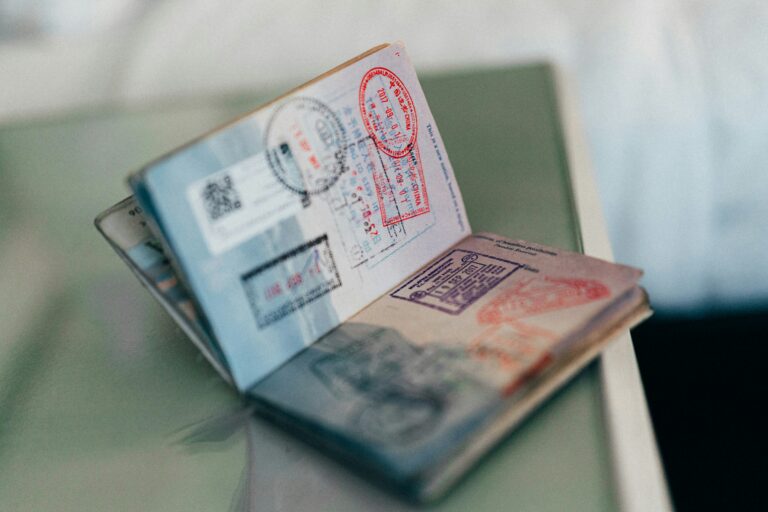
Passport renewal is one of those moments.
And for many, it is not a straightforward experience.
Distance Should Not Define Access
For citizens living abroad, access to government services is shaped by geography.
Consular offices may be located in major cities, requiring significant travel for those living farther away. Appointment availability can be limited, and processes are often time-consuming.
The result is a system where access is technically available, but practically constrained.
This creates a disconnect.
Citizens who are otherwise digitally engaged—managing finances, businesses, and communication online, are required to revert to manual processes for something as fundamental as identity renewal.
A Missed Opportunity for Engagement
Diaspora communities represent more than just a population segment. They are a strategic asset.
According to the World Bank, remittance flows to Sub-Saharan Africa consistently exceed $50 billion annually. In many Francophone countries, these flows form a significant part of national income.
But engagement is not only economic.
Strong connections between governments and their diaspora can support:
- Investment and entrepreneurship
- Knowledge transfer
- Cultural and diplomatic influence
When access to services is difficult, these connections weaken. Administrative friction becomes a barrier to broader engagement.
Digital Passport Renewal as a Practical Step Forward
Improving diaspora engagement does not always require large-scale reform. Sometimes, it begins with improving a single, high-impact service.
Passport renewal is one such service.
By enabling citizens to renew their passports remotely, governments can:
- Reduce reliance on physical consular visits
- Improve accessibility across different regions
- Shorten processing timelines
More importantly, they create a service experience that reflects how citizens already live, digitally, globally, and with expectations of convenience.
What Effective Systems Look Like
For digital passport renewal to deliver value, certain elements must be in place.
Accessibility across borders
Citizens should be able to initiate and complete the process regardless of their location.
Secure identity verification
Biometric validation ensures that remote processes remain aligned with national security standards.
Clear and guided user journeys
Users should be supported at every step, reducing errors and incomplete applications.
Integrated processing
From application to payment to approval, the experience should be seamless.
These elements are not theoretical. Platforms such as ePass by Seamfix demonstrate how governments can implement these capabilities in a practical, scalable way.
Aligning With Regional Digital Agendas
Across Francophone Africa, there is growing momentum around digital transformation.
Governments are investing in e-governance frameworks, digital identity systems, and improved public service delivery. In this context, passport renewal is not an isolated service—it is part of a broader shift toward modern governance.
By digitizing passport renewal for diaspora populations, governments can:
- Align with national digital strategies
- Demonstrate progress in service delivery
- Build confidence in other digital initiatives
It becomes both a functional improvement and a visible signal of change.
A More Connected Future
The relationship between governments and their diaspora is evolving.
As citizens become more globally distributed, expectations around access and service delivery continue to change. Governments that adapt to this reality are better positioned to maintain strong, ongoing relationships with their citizens abroad.
Digital passport renewal is not a complete solution, but it is a meaningful step.
It simplifies access, reduces friction, and reinforces a sense of connection.
And in doing so, it shifts the experience from one of inconvenience to one of continuity.
In conclusion…
For many citizens abroad, a passport is more than a document. It is a link to home.
Ensuring that this link remains easy to maintain is a reflection of how governments value and engage their global communities.
As Francophone African governments continue to strengthen their digital public service infrastructure, the opportunity to improve diaspora engagement is both immediate and strategic. Passport renewal, as a high-demand and high-visibility service, offers a practical entry point for this transformation.
The challenge now is execution.
Implementing secure, scalable, and user-friendly systems requires partners with both technical expertise and a deep understanding of public sector realities. Platforms like ePass by Seamfix are already supporting governments in this transition, enabling remote access to passport services while maintaining the integrity, security, and structure required for national identity systems.
For countries seeking to modernize service delivery and strengthen connections with their citizens abroad, the tools are already available. What remains is the decision to adopt and scale them.
Ready to scale passport renewal for your citizens? Talk to our sales team: https://seamfix.com/contact-us-2/