Skip to content

Suggested

Language: English. French, Portuguese and Arabic are in preparation.

Discuss your project

Adaptive Authentication and Its Future in IAM

Imagine this: You’re logging into your favorite online store to buy a new pair of sneakers. You type in your password, and instead of just letting you in, the system asks you to verify your identity with a fingerprint scan. Why? Because it noticed you’re logging in from a new device in a different city. This isn’t just a random security check—it’s adaptive authentication in action.

Adaptive authentication is one of the most exciting trends in Identity and Access Management (IAM), and it’s changing the way we think about security. Gone are the days of relying solely on passwords. Today, IAM is smarter, more dynamic, and more user-friendly than ever before.

In this article, we’ll explore what adaptive authentication is, why it’s the future of IAM, and how solutions like Seamfix iAM are leading the charge in this new era of security.

What is Adaptive Authentication?

Adaptive authentication is like having a security guard who knows you personally. Instead of using a one-size-fits-all approach, it assesses the risk of each login attempt in real-time and adjusts the level of authentication required.

Here’s how it works:

  1. Risk Assessment: The system analyzes various factors, such as the user’s location, device, time of login, and behavior patterns.
  2. Dynamic Response: Based on the risk level, the system decides whether to grant access, require additional verification (like a fingerprint or one-time password), or block the attempt altogether.
  3. User Experience: Low-risk logins are seamless, while high-risk logins trigger additional security steps.

For example, if you’re logging in from your usual laptop at home, you might only need a password. But if you’re logging in from a new device in a different country, the system might ask for a fingerprint scan or a one-time code sent to your phone.

Why Adaptive Authentication is the Future of IAM

Traditional authentication methods, like passwords, are no longer enough to protect against today’s sophisticated cyber threats. Here’s why adaptive authentication is becoming the gold standard in IAM:

1. Enhanced Security

Adaptive authentication adds an extra layer of security by continuously assessing risk. Even if a hacker steals your password, they’ll have a hard time bypassing additional verification steps.

2. Improved User Experience

Nobody likes jumping through hoops to log in. Adaptive authentication strikes the perfect balance between security and convenience, ensuring a smooth experience for legitimate users while keeping hackers at bay.

3. Real-Time Threat Detection

By analyzing login attempts in real-time, adaptive authentication can detect and respond to suspicious activity immediately. This reduces the risk of data breaches and unauthorized access.

4. Scalability

As organizations grow, so do their security needs. Adaptive authentication scales effortlessly, making it suitable for businesses of all sizes.

Key Features of Adaptive Authentication

So, what makes adaptive authentication so powerful? Here are some of its key features:

1. Contextual Awareness

Adaptive authentication considers the context of each login attempt, such as the user’s location, device, and network. This helps the system determine whether the attempt is legitimate or suspicious.

2. Behavioral Biometrics

By analyzing user behavior, such as typing speed and mouse movements, adaptive authentication can detect anomalies that might indicate a security threat.

3. Multi-Factor Authentication (MFA)

Adaptive authentication often incorporates MFA, requiring users to verify their identity through multiple methods. This could include something they know (a password), something they have (a smartphone), or something they are (a fingerprint).

4. Machine Learning

Machine learning algorithms enable adaptive authentication systems to learn from past behavior and improve their risk assessments over time.

How Seamfix iAM is Leading the Way

When it comes to adaptive authentication, Seamfix iAM is at the forefront of innovation. This cutting-edge IAM solution offers:

  • Dynamic Risk Assessment: Seamfix iAM analyzes login attempts in real-time, adjusting the level of authentication required based on the risk level.
  • Seamless User Experience: With features like Single Sign-On (SSO) and adaptive MFA, Seamfix iAM ensures a smooth and secure login process.
  • Scalability: Whether you’re a small business or a large enterprise, Seamfix iAM scales to meet your needs.
  • Integration: Seamfix iAM seamlessly integrates with existing systems, making it easy to implement adaptive authentication across your organization.

By leveraging Seamfix iAM, organizations can stay ahead of the curve and protect their digital assets with the latest in IAM technology.

The Future of Adaptive Authentication

As technology continues to evolve, so will adaptive authentication. Here are some trends to watch out for:

1. Passwordless Authentication

Passwords are becoming a thing of the past. In the future, adaptive authentication will rely more on biometrics, behavioral analysis, and other passwordless methods.

2. AI-Driven Security

Artificial intelligence will play a bigger role in adaptive authentication, enabling systems to detect and respond to threats with even greater accuracy.

3. IoT Integration

As the Internet of Things (IoT) grows, adaptive authentication will extend to IoT devices, ensuring secure communication and access control.

4. Continuous Authentication

Instead of just verifying identity at login, adaptive authentication will continuously monitor user activity throughout the session, providing ongoing protection.

Final Thoughts

Adaptive authentication is more than just a trend—it’s the future of IAM. By combining enhanced security with a seamless user experience, it’s revolutionizing the way we protect our digital lives.

Solutions like Seamfix iAM are leading the charge, offering innovative features that make adaptive authentication accessible to organizations of all sizes. So, whether you’re a business owner, an IT professional, or just someone who cares about online security, now is the time to embrace adaptive authentication and stay ahead of the curve.

Ready to explore the future of IAM? Check out Seamfix iAM to learn more about how it can help you implement adaptive authentication and secure your digital world.
IAM for Remote and Hybrid Workforces

Let’s face it—the way we work has changed forever. Gone are the days when everyone clocked in at the same office, sat at their desks, and accessed company systems from a secure, on-site network. Today, remote and hybrid workforces are the new normal. While this shift has brought flexibility and work-life balance, it’s also introduced a whole new set of challenges, especially when it comes to security. That’s where Identity and Access Management (IAM) comes in. And trust me, it’s more exciting (and important) than it sounds.

In this blog, we’ll explore how IAM is evolving to meet the needs of remote and hybrid workforces, why it matters, and how solutions like Seamfix iAM are making it easier than ever to keep your business secure—no matter where your team is logging in from.

The New Workplace: Remote and Hybrid Workforces

First, let’s set the stage. Remote work isn’t just a trend anymore—it’s a fundamental shift in how businesses operate. Employees are logging in from home offices, coffee shops, and even beachside villas (lucky them!). Hybrid workforces, where employees split their time between the office and remote locations, are also becoming the norm.

But here’s the catch: with this newfound flexibility comes a big challenge for IT and security teams. How do you ensure that only the right people have access to your company’s systems and data? How do you protect sensitive information when employees are using personal devices or unsecured networks? That’s where IAM steps in.

What is IAM, and Why is it Crucial for Remote Work?

IAM, or Identity and Access Management, is like the gatekeeper of your digital kingdom. It ensures that only authorized users can access your systems, apps, and data—and only in the ways they’re supposed to. For remote and hybrid workforces, IAM is absolutely essential. Here’s why:

  1. Security Beyond the Office Walls: When employees are working remotely, they’re no longer protected by the company’s secure network. IAM ensures that their identities are verified and their access is tightly controlled, no matter where they are.
  2. Device Diversity: Remote workers often use personal devices (laptops, phones, tablets) to access company systems. IAM helps manage and secure these devices, ensuring they meet security standards.
  3. Compliance: Many industries have strict regulations about data protection and privacy. IAM helps businesses stay compliant, even when employees are scattered across the globe.
  4. User Experience: Let’s be honest—no one likes jumping through hoops to log in. Modern IAM solutions make it easy for employees to access what they need while keeping things secure.

Emerging Trends in IAM for Remote and Hybrid Workforces

As remote and hybrid work becomes the norm, IAM is evolving to meet new challenges. Here are some of the hottest trends shaping the future of IAM:

  1. Zero Trust Security: The old model of “trust but verify” is out. Zero Trust means no one is trusted by default, whether they’re inside or outside the corporate network. IAM plays a key role in enforcing this by continuously verifying identities and access.
  2. Multi-Factor Authentication (MFA): Passwords alone aren’t enough anymore. MFA adds an extra layer of security by requiring users to verify their identity through multiple methods (like a fingerprint or a one-time code).
  3. Passwordless Authentication: Speaking of passwords, they’re becoming a thing of the past. IAM solutions are increasingly using biometrics (like facial recognition or fingerprints) and other passwordless methods to make security seamless and user-friendly.
  4. Adaptive Authentication: This is like having a security system that learns and adapts. If a login attempt seems suspicious (e.g., from a new device or location), the system can automatically require additional verification.
  5. Cloud-Based IAM (IDaaS): With remote work, cloud-based IAM solutions (also known as Identity as a Service or IDaaS) are becoming the go-to choice. They’re scalable, cost-effective, and easy to manage from anywhere.
  6. Integration with Collaboration Tools: Tools like Slack, Microsoft Teams, and Zoom are essential for remote work. Modern IAM solutions integrate seamlessly with these platforms, ensuring secure access without disrupting workflows.

How Seamfix iAM Fits Into the Picture

Now, let’s talk about a real-world example. Seamfix iAM is a modern IAM solution that’s perfectly suited for remote and hybrid workforces. It offers features like Single Sign-On (SSO), Multi-Factor Authentication (MFA), and adaptive security, making it easy to manage identities and access across your organization.

What makes Seamfix iAM stand out is its focus on simplicity and scalability. Whether you’re a small business with a handful of remote employees or a large enterprise with a global workforce, Seamfix iAM can grow with you. Plus, its user-friendly design ensures that even non-tech-savvy employees can navigate it with ease.

For example, imagine an employee logging in from a coffee shop. With Seamfix iAM, they can use SSO to access all their apps with one login, while MFA ensures their identity is verified. If the system detects anything unusual (like a login attempt from a new device), it can automatically trigger additional security measures. It’s security made simple—and that’s exactly what remote and hybrid workforces need.

Why IAM Matters for Your Business

If you’re running a business with remote or hybrid employees, IAM isn’t just a nice-to-have—it’s a must-have. Here’s why:

  1. Protects Sensitive Data: IAM ensures that only authorized users can access your company’s systems and data, reducing the risk of breaches.
  2. Boosts Productivity: By simplifying access and reducing login friction, IAM helps employees stay focused on their work.
  3. Ensures Compliance: With IAM, you can easily enforce security policies and meet regulatory requirements.
  4. Future-Proofs Your Business: As remote and hybrid work continues to grow, having a robust IAM solution in place ensures you’re ready for whatever comes next.

Final Thoughts

The rise of remote and hybrid workforces has changed the game for businesses everywhere. While it’s brought incredible flexibility, it’s also introduced new security challenges. That’s where IAM comes in. By managing identities and access, IAM ensures that your business stays secure, compliant, and productive—no matter where your team is working from.

And with solutions like Seamfix iAM, adopting IAM has never been easier. It’s designed to meet the unique needs of remote and hybrid workforces, making it the perfect choice for businesses looking to stay ahead in today’s digital landscape.

So, whether you’re just starting to explore IAM or looking to upgrade your current system, now’s the time to take the plunge. After all, in a world where work happens everywhere, security should too.

Ready to learn more about how Seamfix iAM can support your remote or hybrid workforce? Check out their website here.

Identity as a Service (IDaaS) – A Deep Dive

In today’s digital world, where everything from your morning coffee order to your bank transactions happens online, managing who has access to what has become more critical than ever. Enter Identity and Access Management (IAM), the unsung hero of cybersecurity. But as technology evolves, so does IAM. One of the most exciting trends in this space is Identity as a Service (IDaaS). If you’re wondering what that means, don’t worry—we’re breaking it down in a way that’s easy to understand, friendly, and maybe even a little fun.

What is IAM, and Why Should You Care?

Let’s start with the basics. IAM, or Identity and Access Management, is like the bouncer at the door of a club. It ensures that only the right people get in and that they only have access to the areas they’re supposed to. In the digital world, this means managing user identities (like employees, customers, or partners) and controlling what systems, apps, or data they can access.

But here’s the thing: as businesses grow and technology becomes more complex, traditional IAM systems can feel like trying to manage a stadium-sized crowd with a single bouncer. That’s where Identity as a Service (IDaaS) comes in.

What is Identity as a Service (IDaaS)?

Imagine if that bouncer didn’t just work at one club but could manage access for every venue in the city, all while learning and adapting to new security threats. That’s essentially what IDaaS does. It’s a cloud-based solution that handles identity and access management without the need for on-premise hardware or software. Think of it as IAM, but smarter, faster, and more flexible.

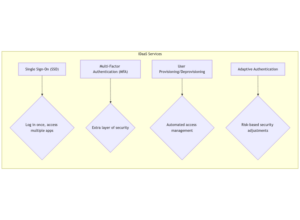
IDaaS providers offer services like:

  • Single Sign-On (SSO): Log in once, and you’re good to go across multiple apps.
  • Multi-Factor Authentication (MFA): An extra layer of security to make sure it’s really you.
  • User Provisioning and Deprovisioning: Automatically adding or removing access when someone joins or leaves an organization.
  • Adaptive Authentication: Adjusting security measures based on risk levels (e.g., requiring MFA only for suspicious logins).


Why is IDaaS a Game-Changer?

  1. It’s Scalable: Whether you’re a small startup or a global enterprise, IDaaS grows with you. No need to worry about outgrowing your system.
  2. It’s Cost-Effective: Since it’s cloud-based, you don’t need to invest in expensive hardware or maintenance.
  3. It’s User-Friendly: Let’s face it—no one likes remembering 20 different passwords. IDaaS makes life easier for users while keeping things secure.
  4. It’s Future-Proof: With cyber threats evolving every day, IDaaS providers constantly update their systems to stay ahead of the curve.

Emerging Trends in IDaaS

The world of IDaaS is constantly evolving. Here are some of the hottest trends shaping its future:

  1. Zero Trust Security: The old model of “trust but verify” is out. Zero Trust means no one is trusted by default, not even inside the network. IDaaS plays a key role in enforcing this by continuously verifying identities and access.
  2. AI and Machine Learning: IDaaS platforms are getting smarter. They can detect unusual behavior (like logging in from a new device or location) and automatically tighten security.
  3. Passwordless Authentication: Passwords are so 2010. IDaaS is moving toward biometrics (like fingerprints or facial recognition) and other passwordless methods to make security seamless and user-friendly.
  4. Integration with IoT: As more devices get connected (think smart thermostats, wearables, etc.), IDaaS is stepping up to manage identities and access for the Internet of Things.
  5. Privacy and Compliance: With regulations like GDPR and CCPA, businesses need to ensure they’re handling user data responsibly. IDaaS helps by providing tools for compliance and data protection.

Where Does Seamfix iAM Fit In?

Now, let’s talk about a real-world example. Seamfix iAM is a cutting-edge IAM solution that embodies many of these emerging trends. Designed with scalability and user experience in mind, Seamfix iAM offers features like Single Sign-On, Multi-Factor Authentication, and seamless integration with existing systems. Whether you’re a business looking to streamline access for your employees or a service provider managing customer identities, Seamfix iAM makes it easy to stay secure without sacrificing convenience.

What sets Seamfix iAM apart is its focus on adaptability. In a world where cyber threats are constantly evolving, having a solution that can grow and adapt with your needs is crucial. Plus, its user-friendly design ensures that even non-tech-savvy users can navigate it with ease.

Why Should You Care About IDaaS?

If you’re a business owner, IT professional, or even just someone who uses the internet (so, everyone), IDaaS matters. It’s not just about keeping hackers out—it’s about creating a seamless, secure experience for everyone involved. Whether it’s protecting sensitive data, simplifying login processes, or ensuring compliance with regulations, IDaaS is the future of identity management.

And with solutions like Seamfix iAM leading the charge, adopting IDaaS has never been easier or more accessible.

Final Thoughts

The world of IAM is changing fast, and IDaaS is at the forefront of this transformation. It’s not just a trend—it’s a necessity in today’s digital landscape. By embracing IDaaS, businesses can stay secure, scalable, and ahead of the curve.

So, whether you’re exploring IAM solutions for the first time or looking to upgrade your current system, now’s the time to dive into the world of Identity as a Service. And who knows? With tools like Seamfix iAM, you might just find that managing identities is easier—and more exciting—than you ever imagined.

Ready to take the plunge? Learn more about how Seamfix iAM can transform your identity management strategy here.

AI and Machine Learning in IAM

In today’s digital-first world, businesses and individuals rely on secure access to online resources more than ever. But as cyber threats become more sophisticated, traditional Identity and Access Management (IAM) systems are struggling to keep up. Enter Artificial Intelligence (AI) and Machine Learning (ML)—two groundbreaking technologies that are revolutionizing how organizations manage identities, detect threats, and ensure seamless access.

What is IAM, and Why Does It Matter?

IAM (Identity and Access Management) is like the digital security system that decides who can access what within an organization. It ensures that the right people have the right access at the right time—whether it’s employees logging into work systems, customers accessing online banking, or contractors connecting to company networks.

Traditional IAM solutions rely on fixed rules and manual oversight, which can make them slow to adapt to evolving security threats. This is where AI and ML come in, making IAM smarter, faster, and more proactive.

How AI and Machine Learning Are Changing IAM

AI and ML bring automation and intelligence to IAM, allowing systems to learn from data, detect anomalies, and predict threats before they happen. Here’s how these technologies are transforming IAM:

1. Intelligent Authentication

Forget complicated passwords and outdated security questions. AI-powered authentication methods analyze multiple factors—such as typing patterns, device location, and user behavior—to determine whether access requests are legitimate. If something seems off (e.g., a login attempt from an unusual location), AI can trigger additional security checks or block access altogether.

2. Behavioral Analytics for Fraud Detection

Machine learning can track and analyze user behavior over time. If an employee typically logs in from Nigeria at 9 AM and suddenly logs in from another country at midnight, the system can flag this as suspicious. AI continuously learns from user behavior to detect anomalies and prevent security breaches.

3. Automated Access Control

Managing user access manually can be a nightmare, especially in large organizations. AI helps by automatically granting or revoking access based on predefined security policies and user roles. This reduces the risk of human error and insider threats.

4. Real-Time Threat Detection and Response

Cyberattacks don’t wait for IT teams to respond. AI-powered IAM systems can detect security threats in real-time, identify patterns of suspicious behavior, and take immediate action—whether it’s locking an account, alerting security teams, or requesting multi-factor authentication.

5. Passwordless Authentication

AI is making passwordless authentication a reality by using technologies like biometric recognition (fingerprints, facial scans) and behavioral authentication. This enhances security while eliminating the frustration of forgotten passwords.

The Benefits of AI-Powered IAM

  • Stronger Security: AI detects and prevents unauthorized access in real-time.
  • Better User Experience: Passwordless and intelligent authentication makes logging in smoother.
  • Faster Threat Response: ML algorithms can predict and stop cyber threats before they cause damage.
  • Lower Costs: Automating IAM reduces the need for manual oversight and IT interventions.

Real-World Applications

From banking to healthcare, AI-powered IAM is already making a difference. For example:

  • Financial Institutions use AI to detect fraudulent transactions and prevent unauthorized access to accounts.
  • Enterprises rely on AI-driven IAM to manage employee access and prevent insider threats.
  • Healthcare Providers use AI to ensure that only authorized personnel can access sensitive patient data.

Where Seamfix iAM Fits In

At Seamfix, we understand the importance of seamless, intelligent identity management. Our solution, Seamfix iAM, is designed to integrate with modern security frameworks, leveraging AI-driven automation to ensure secure, efficient, and scalable IAM solutions. Whether managing employee access or securing digital transactions, Seamfix iAM helps businesses stay ahead of security challenges.

The Future of IAM is AI-Driven

AI and machine learning are no longer just buzzwords—they are shaping the future of IAM. As cyber threats evolve, businesses must embrace intelligent, adaptive security measures to protect their systems and data. By incorporating AI-driven IAM solutions, organizations can achieve stronger security, better compliance, and a smoother user experience.

Are you ready to future-proof your identity management? Now’s the time to explore AI-powered IAM solutions that keep you secure, efficient, and one step ahead.

Decentralized Identity and Blockchain in IAM

Decentralized Identity and Blockchain in IAM


In today’s digital world, where data breaches and identity theft are becoming everyday headlines, securing access to sensitive information has never been more critical. Identity and Access Management (IAM) solutions help organizations manage who gets access to what, but traditional IAM systems are facing new challenges. Enter the game-changers: Decentralized Identity and Blockchain in IAM. These emerging trends are transforming IAM as we know it, making security stronger, privacy better, and access management smarter.

What is IAM, and Why Does It Matter?

IAM (Identity and Access Management) is the framework that ensures the right people have the right access to the right resources at the right time. Think of it as the digital version of a security guard at the entrance of a building, deciding who gets in and what doors they can open.

Traditional IAM systems are usually centralized, meaning a single organization (or provider) controls the identity data. This setup has worked for years, but it has some problems—security risks, privacy concerns, and a lack of user control over personal data. This is where Decentralized Identity (DID) and Blockchain step in to shake things up.

Decentralized Identity: Putting Users in Control

Decentralized Identity (DID) is a new approach that shifts control of identity from centralized authorities (like companies or governments) to individuals themselves. Instead of relying on a company like Google or Facebook to verify your identity, you use a self-sovereign identity (SSI) stored in a digital wallet on your device.

Here’s how it works:

  • You get a unique digital identity stored securely on your device.
  • Organizations can verify your credentials without storing your personal data.
  • You decide who gets access to your information and for how long.

This approach means fewer data breaches because there’s no single central database to hack. Plus, users regain control over their data, improving privacy and security.

How Blockchain is Changing IAM

Blockchain—the technology behind cryptocurrencies like Bitcoin—is also making waves in IAM. At its core, blockchain is a distributed ledger that records transactions securely and transparently across multiple computers.

When applied to IAM, blockchain:

  • Ensures tamper-proof identity verification
  • Eliminates the need for middlemen (like banks or government agencies)
  • Reduces the risk of fraud and identity theft

For example, imagine an employee onboarding system where credentials (like degrees, certifications, or background checks) are stored on a blockchain. Instead of calling universities or previous employers, HR can instantly verify the candidate’s credentials without worrying about forgery.

The Benefits of Decentralized IAM

  • Better Security: No central database means hackers have no single point of attack.
  • Enhanced Privacy: Users control their data and choose what to share.
  • More Efficiency: Faster and more reliable identity verification.
  • Interoperability: Works across different organizations without the need for multiple logins.

Real-World Applications

Industries like healthcare, finance, and enterprise security are already exploring decentralized IAM solutions. From secure patient records in hospitals to digital passports for travelers, decentralized identity and blockchain are solving real-world problems.

Where Seamfix iAM Fits In

At Seamfix, we’re all about simplifying identity and access management for businesses. Our solution, Seamfix iAM, is designed to be scalable, easy to implement, and secure—helping organizations ensure that employees, contractors, and partners have the right access, at the right time, with the right security. As IAM continues to evolve, Seamfix iAM stays ahead of the curve, embracing innovative technologies to make identity management seamless.

The Future of IAM is Here

The shift towards decentralized identity and blockchain in IAM isn’t just a passing trend—it’s the future. As businesses and individuals demand more control, more security, and more efficiency, these technologies are paving the way for a safer digital world.

Are you ready to embrace the future of IAM? It’s time to rethink identity management and explore solutions that put security and privacy first.

IAM Strategies to Tackle Shadow IT Risks

Picture this: You’re the IT manager of a growing company, and everything seems to be running smoothly. But one day, you discover that employees are using unauthorized apps and tools to get their work done. Maybe it’s a file-sharing app that hasn’t been approved, or a project management tool that IT doesn’t even know about. This, my friend, is what’s known as shadow IT—and it’s a lot more common than you might think. That’s why implementing IAM Strategies to Tackle Shadow IT Risks is crucial to ensuring security, compliance, and proper access management across your organization.

While shadow IT might seem harmless (after all, employees are just trying to be productive), it can pose serious risks to your organization’s security and compliance. That’s where Identity and Access Management (IAM) comes in. IAM is like the gatekeeper of your digital kingdom, ensuring that only authorized tools and users have access to your resources.

In this article, we’ll explore the risks of shadow IT, how robust IAM practices can help, and how solutions like Seamfix iAM can make the process easier and more effective.

What is Shadow IT, and Why Should You Care?

Shadow IT refers to the use of software, hardware, or services without the explicit approval of the IT department. It happens when employees, frustrated by slow processes or limited tools, take matters into their own hands. Common examples include:

  • Using personal email accounts for work-related communication.
  • Downloading unauthorized apps for file sharing or collaboration.
  • Storing sensitive data on personal cloud storage services.

While shadow IT might seem like a quick fix for productivity, it can lead to serious problems:

  • Security Risks: Unapproved tools often lack the security measures required to protect sensitive data, making them easy targets for hackers.
  • Compliance Issues: Many industries have strict regulations about data storage and access. Shadow IT can lead to violations, resulting in hefty fines.
  • Data Loss: Without proper backups and controls, data stored in unauthorized tools can be lost or corrupted.
  • Lack of Visibility: IT teams can’t protect what they can’t see. Shadow IT creates blind spots, leaving your organization vulnerable.

How IAM Can Help Tackle Shadow IT

Identity and Access Management (IAM) is your best defense against shadow IT. By implementing robust IAM practices, you can regain control over your digital environment while still empowering employees to work efficiently. Here’s how:

1. Centralized Access Control

IAM systems provide a centralized platform for managing user identities and access permissions. This means you can ensure that employees only have access to approved tools and resources.

2. Single Sign-On (SSO)

SSO allows employees to access multiple applications with a single set of credentials. This not only simplifies the login process but also reduces the temptation to use unauthorized tools.

3. Multi-Factor Authentication (MFA)

MFA adds an extra layer of security by requiring users to verify their identity through multiple methods (e.g., a password and a fingerprint). This makes it harder for unauthorized users to gain access.

4. User Activity Monitoring

IAM solutions can track user activity, providing visibility into which tools and resources are being accessed. This helps IT teams identify and address shadow IT before it becomes a problem.

5. Automated Provisioning and Deprovisioning

When employees join or leave the organization, IAM systems can automatically grant or revoke access to tools and resources. This ensures that only authorized users have access at all times.

Best Practices for Handling Shadow IT with IAM

Now that we know how IAM can help, let’s dive into some best practices for tackling shadow IT:

1. Educate Employees

The first step in combating shadow IT is to educate employees about the risks. Explain why it’s important to use approved tools and how shadow IT can put the organization at risk.

2. Provide Approved Alternatives

Often, employees turn to shadow IT because they feel the tools provided by IT are inadequate. Work with your team to identify and implement tools that meet employees’ needs.

3. Implement a Robust IAM Solution

A comprehensive IAM solution, like Seamfix iAM, can help you manage user identities, enforce access policies, and monitor activity across your organization.

4. Conduct Regular Audits

Regularly review your IT environment to identify unauthorized tools and services. Use the insights gained to refine your IAM policies and practices.

5. Foster a Collaborative Culture

Encourage open communication between IT and other departments. When employees feel heard, they’re less likely to resort to shadow IT.

How Seamfix iAM Can Help

When it comes to managing shadow IT, Seamfix iAM is a game-changer. This powerful IAM solution offers:

  • Centralized Identity Management: Seamlessly manage user identities and access permissions across your organization.
  • Single Sign-On (SSO): Simplify the login process and reduce the temptation to use unauthorized tools.
  • Real-Time Monitoring: Gain visibility into user activity and identify shadow IT before it becomes a problem.
  • Scalability: Whether you’re a small business or a large enterprise, Seamfix iAM scales to meet your needs.

By leveraging Seamfix iAM, you can create a secure and efficient digital environment, minimizing the risks associated with shadow IT.

Final Thoughts

Shadow IT might seem like a small issue, but it can have big consequences. From security breaches to compliance violations, the risks are too significant to ignore. Fortunately, with robust IAM practices and the right tools, you can tackle shadow IT head-on.

Solutions like Seamfix iAM make it easier than ever to manage user identities, enforce access policies, and monitor activity across your organization. So, don’t let shadow IT lurk in the shadows—take control today and protect your digital kingdom.

Ready to tackle shadow IT with confidence? Check out Seamfix iAM to learn more about how it can help you implement robust IAM practices.

IAM for IoT: Unique Challenges and Solutions

IAM for IoT: Unique Challenges and Solutions

The Internet of Things (IoT) is everywhere. From smart thermostats that adjust your home’s temperature to wearable fitness trackers that monitor your health, IoT devices are becoming an integral part of our lives. But with great connectivity comes great responsibility—especially when it comes to securing these devices. This is where IAM for IoT: Unique Challenges and Solutions steps in. IAM is like the bouncer at a club, ensuring only the right people (or devices) get in and keeping the troublemakers out.

However, IAM for IoT isn’t as straightforward as it is for traditional systems. IoT brings its own set of risks and challenges, and if not handled properly, it can leave your systems vulnerable to cyberattacks. In this article, we’ll break down the unique challenges of IAM for IoT, explore the risks, and discuss how solutions like Seamfix iAM can help tackle these issues.

What is IAM, and Why Does It Matter for IoT?

IAM, or Identity and Access Management, is a framework of policies and technologies that ensure the right individuals (or devices) have access to the right resources at the right time. For IoT, this means managing the identities of potentially thousands or even millions of devices, ensuring they can securely communicate with each other and with backend systems.

Without proper IAM, IoT ecosystems can become a hacker’s playground. Imagine a smart home where your door lock, security cameras, and even your coffee maker are connected to the internet. If a hacker gains access to one device, they could potentially control your entire home. Scary, right?

Unique Challenges of IAM for IoT

1. Scale and Complexity

IoT ecosystems are massive. A single smart city project might involve millions of devices, each needing its own identity and access permissions. Managing this scale manually is impossible. Traditional IAM systems, designed for human users, simply aren’t equipped to handle the sheer volume and complexity of IoT devices.

2. Diverse Device Types

Not all IoT devices are created equal. Some are powerful, like industrial sensors, while others are lightweight, like smart light bulbs. This diversity makes it challenging to implement a one-size-fits-all IAM solution. For example, a smartwatch might not have the processing power to support complex authentication protocols.

3. Lack of Standardization

IoT devices come from different manufacturers, each with their own protocols and security standards. This lack of standardization makes it difficult to create a unified IAM framework that works across all devices.

4. Constant Connectivity

IoT devices are always on and always connected, which increases the risk of unauthorized access. Unlike human users who log in and out, IoT devices are constantly communicating with each other and with backend systems, creating more opportunities for hackers to exploit vulnerabilities.

5. Limited User Interaction

Many IoT devices operate autonomously with little to no human interaction. This means traditional authentication methods like passwords or two-factor authentication (2FA) aren’t always feasible.

Risks of Poor IAM in IoT

If IAM isn’t properly implemented in IoT ecosystems, the risks can be catastrophic:

  • Data Breaches: Hackers can gain access to sensitive data, from personal health information to industrial secrets.
  • Device Hijacking: Cybercriminals can take control of IoT devices, using them for malicious purposes like Distributed Denial of Service (DDoS) attacks.
  • Privacy Violations: Unauthorized access to IoT devices can lead to invasions of privacy, such as hackers spying through smart cameras.
  • Operational Disruptions: In industrial settings, compromised IoT devices can disrupt operations, leading to financial losses and safety hazards.

Solutions to IAM Challenges in IoT

So, how do we tackle these challenges? Here are some key solutions:

1. Automated IAM Systems

To handle the scale and complexity of IoT, automated IAM systems are essential. These systems can dynamically assign identities, manage permissions, and detect anomalies in real-time.

2. Lightweight Authentication Protocols

For resource-constrained devices, lightweight authentication protocols like OAuth 2.0 or Mutual TLS can be used. These protocols provide robust security without overwhelming the device’s processing power.

3. Blockchain for Identity Management

Blockchain technology can be used to create decentralized and tamper-proof identity records for IoT devices. This ensures that device identities are secure and cannot be easily forged.

4. Zero Trust Architecture

A Zero Trust approach assumes that no device or user is trustworthy by default. Every access request is rigorously verified, reducing the risk of unauthorized access.

5. Unified IAM Platforms

Unified IAM platforms, like Seamfix iAM, provide a centralized solution for managing identities across diverse IoT ecosystems. These platforms support multiple authentication methods, integrate with existing systems, and scale effortlessly to meet the demands of IoT.

How Seamfix iAM Can Help

When it comes to IAM for IoT, Seamfix iAM stands out as a robust and flexible solution. Designed to handle the unique challenges of IoT, Seamfix iAM offers:

  • Scalability: Whether you’re managing 100 devices or 10 million, Seamfix iAM scales to meet your needs.
  • Flexibility: It supports a wide range of authentication methods, making it suitable for diverse IoT devices.
  • Security: With advanced encryption and real-time monitoring, Seamfix iAM ensures your IoT ecosystem remains secure.
  • Ease of Integration: Seamfix iAM seamlessly integrates with existing systems, reducing implementation time and complexity.

By leveraging Seamfix iAM, organizations can build a secure and efficient IoT ecosystem, minimizing risks and maximizing productivity.

Final Thoughts

IAM for IoT is no longer a nice-to-have—it’s a must-have. As IoT continues to grow, so do the risks associated with it. By understanding the unique challenges and implementing the right solutions, organizations can protect their IoT ecosystems from cyber threats.

Solutions like Seamfix iAM make this process easier, providing a secure and scalable platform for managing IoT identities. So, whether you’re building a smart home, a connected factory, or an entire smart city, don’t overlook the importance of IAM. After all, in the world of IoT, security isn’t just an option—it’s the foundation.

Securing Machine Identities with IAM

When we talk about Identity and Access Management (IAM), most people think of humans—employees logging into systems, accessing files, or using apps. But here’s a fun fact: machines need identities too! Yes, your servers, applications, and even IoT devices have identities, and if they’re not properly managed, they can become a major security risk.

In this article, we’ll break down what machine identities are, why they matter, and how IAM—especially solutions like Seamfix iAM—can help you secure them. Whether you’re a tech pro or just starting to explore IAM, we’ll keep it simple, friendly, and interesting. Let’s dive in!

What Are Machine Identities?

Think of a machine identity as a digital ID card for non-human entities like:

  • Servers: The backbone of your IT infrastructure.
  • Applications: Software that needs to communicate with other systems.
  • IoT Devices: Smart devices like cameras, sensors, or even coffee machines.
  • APIs: The connectors that allow different systems to talk to each other.

Just like humans, machines need to prove who they are before they can access resources. And just like humans, if their identities are compromised, bad things can happen.

Why Are Machine Identities Important?

Machine identities are critical because:

  1. They’re Everywhere: Modern systems rely on machines communicating with each other. Without proper identity management, chaos ensues.
  2. They’re Targets: Hackers love to exploit weak machine identities to gain access to systems, steal data, or launch attacks.
  3. They’re Often Overlooked: While companies focus on securing human identities, machine identities are frequently ignored—until it’s too late.

The Risks of Poor Machine Identity Management

If machine identities aren’t properly secured, you’re opening the door to a host of problems:

  • Data Breaches: Hackers can use compromised machine identities to access sensitive data.
  • System Outages: Misconfigured or unauthorized machines can disrupt operations.
  • Compliance Violations: Many regulations require proper management of machine identities. Fail to comply, and you could face hefty fines.
  • Shadow IT: Unauthorized machines or applications can create security gaps that are hard to detect.

How IAM Secures Machine Identities

IAM isn’t just for humans—it’s also a powerful tool for managing and securing machine identities. Here’s how it works:

1. Assigning Unique Identities

IAM gives each machine a unique identity, just like it does for humans. This ensures that only authorized machines can access your systems.

How Seamfix iAM Helps: Seamfix iAM makes it easy to create and manage machine identities, ensuring every device and application is properly authenticated.

2. Role-Based Access Control (RBAC)

Just like humans, machines should only have access to the resources they need. IAM uses RBAC to enforce this principle.

How Seamfix iAM Helps: With Seamfix iAM, you can define roles and permissions for machines, ensuring they only access what’s necessary.

3. Certificate Management

Many machine identities rely on digital certificates for authentication. IAM solutions can automate the issuance, renewal, and revocation of these certificates.

How Seamfix iAM Helps: Seamfix iAM simplifies certificate management, reducing the risk of expired or compromised certificates.

4. Monitoring and Auditing

IAM solutions track machine activity, making it easier to spot suspicious behavior or unauthorized access.

How Seamfix iAM Helps: Seamfix iAM provides detailed audit logs, so you can monitor machine activity and respond to threats quickly.

5. Automated Lifecycle Management

Machines come and go—servers are decommissioned, applications are updated, and IoT devices are replaced. IAM automates the process of managing these changes.

Seamfix iAM’s automation features update or revoke machine identities as needed, reducing the risk of orphaned or outdated identities.


Real-Life Examples of IAM Securing Machine Identities

Still not convinced? Here are some real-life examples of how IAM can secure machine identities:

  • Preventing API Breaches: An API is given a unique identity and restricted access to only the systems it needs to communicate with. This prevents hackers from using it as an entry point.
  • Securing IoT Devices: A smart camera is assigned a machine identity and given limited access to the network. Even if it’s compromised, the damage is contained.
  • Automating Certificate Renewal: A server’s digital certificate is automatically renewed before it expires, preventing downtime and security gaps.

Why Seamfix iAM is a Great Choice for Securing Machine Identities

If you’re looking for an IAM solution that’s both powerful and user-friendly, Seamfix iAM is a fantastic choice. Here’s why:

  • Easy to Use: Seamfix iAM’s intuitive interface makes it easy to manage machine identities—even if you’re not a tech expert.
  • Automated Workflows: From certificate management to lifecycle updates, Seamfix iAM automates the processes that are most vulnerable to errors.
  • Robust Security: With features like RBAC and detailed audit logs, Seamfix iAM helps you stay one step ahead of potential threats.
  • Scalable: Whether you’re managing a handful of devices or thousands of machines, Seamfix iAM grows with you.

Learn more about Seamfix iAM here: Seamfix iAM

Final Thoughts

Machine identities might not be as glamorous as human identities, but they’re just as important—if not more so. With the right IAM strategy—and a solution like Seamfix iAM—you can secure your machines, protect your systems, and avoid costly breaches.

So, don’t wait until it’s too late. Start securing your machine identities today with a robust IAM solution. Your future self (and your data) will thank you.

Got questions about machine identities or Seamfix iAM? Drop them in the comments—we’d love to help!

Insider Threats: How IAM Can Help Mitigate Risks

Let’s talk about a scary truth: sometimes, the biggest threat to your organization’s security comes from inside. That’s right—Insider Threats: How IAM Can Help Mitigate Risks is a real and growing problem. Whether it’s a disgruntled employee, a careless team member, or a compromised account, insiders can cause serious damage if they have access to the wrong resources.

But don’t panic just yet! There’s a powerful tool that can help you mitigate these risks: Identity and Access Management (IAM). In this article, we’ll break down what insider threats are, how they happen, and how IAM—especially solutions like Seamfix iAM—can help you stay one step ahead. Let’s dive in!

What Are Insider Threats?

An insider threat is a security risk that comes from within your organization. This could be:

  • Malicious Insiders: Employees or contractors who intentionally misuse their access to steal data, sabotage systems, or cause harm.
  • Careless Insiders: Well-meaning employees who accidentally expose sensitive information (like clicking on a phishing link or sharing passwords).
  • Compromised Insiders: Accounts that have been hacked or taken over by external attackers.

Insider threats are particularly dangerous because insiders already have access to your systems. They don’t need to break in—they’re already inside.

How Do Insider Threats Happen?

Insider threats can happen in many ways. Here are a few common scenarios:

  • Abuse of Privileges: An employee with access to sensitive data decides to steal it for personal gain or to sell it.
  • Phishing Attacks: An employee falls for a phishing scam, giving hackers access to their account.
  • Shadow IT: Employees use unauthorized apps or tools, creating security gaps.
  • Poor Offboarding: Former employees retain access to systems after leaving the company.

The good news? With the right IAM strategy, you can significantly reduce these risks.

How IAM Mitigates Insider Threats

IAM is like your organization’s security guard, but smarter. It doesn’t just lock the doors—it controls who gets which keys and monitors how they’re being used. Here’s how IAM helps mitigate insider threats:

1. Least Privilege Access

IAM ensures that users only have access to the resources they need to do their jobs—nothing more. This limits the damage a malicious or careless insider can do.

How Seamfix iAM Helps: Seamfix iAM makes it easy to implement least privilege access with its role-based access control (RBAC) features. You can define roles and permissions in just a few clicks, ensuring users only have access to what they need.

2. Multi-Factor Authentication (MFA)

MFA adds an extra layer of security by requiring users to verify their identity with something they know (like a password) and something they have (like a phone). This makes it much harder for attackers to compromise accounts.

How Seamfix iAM Helps: Seamfix iAM supports MFA, making it easy to add an extra layer of security to your accounts.

3. Monitoring and Auditing

IAM solutions can track who accesses what, when, and from where. This helps you spot suspicious activity before it becomes a major problem.

How Seamfix iAM Helps: Seamfix iAM provides detailed audit logs, so you can monitor user activity and quickly identify potential threats.

4. Automated Offboarding

When employees leave, it’s critical to revoke their access immediately. IAM automates this process, reducing the risk of former employees causing trouble.

How Seamfix iAM Helps: Seamfix iAM simplifies offboarding with automated workflows. When an employee leaves, their access is revoked with just a few clicks.

5. Behavioral Analytics

Some IAM solutions use AI to analyze user behavior and detect anomalies. For example, if an employee suddenly starts accessing files they’ve never touched before, the system can flag it.

How Seamfix iAM Helps: While Seamfix iAM focuses on simplicity and usability, its robust monitoring features help you stay on top of user activity and spot potential threats.

Real-Life Examples of IAM Stopping Insider Threats

Still not convinced? Here are some real-life examples of how IAM can stop insider threats:

  • Preventing Data Theft: An employee tries to download sensitive customer data. IAM detects the unusual activity and blocks the action.
  • Stopping Phishing Attacks: A hacker gains access to an employee’s account, but MFA stops them from logging in.
  • Automating Offboarding: A disgruntled employee leaves the company, but IAM automatically revokes their access before they can cause any damage.

Why Seamfix iAM is a Great Choice for Mitigating Insider Threats

If you’re looking for an IAM solution that’s both powerful and user-friendly, Seamfix iAM is a fantastic choice. Here’s why:

  • Easy to Use: Seamfix iAM’s intuitive interface makes it easy to manage users, roles, and permissions—even if you’re not a tech expert.
  • Automated Workflows: From onboarding to offboarding, Seamfix iAM automates the processes that are most vulnerable to insider threats.
  • Robust Security: With features like MFA and detailed audit logs, Seamfix iAM helps you stay one step ahead of potential threats.
  • Scalable: Whether you’re a small business or a large enterprise, Seamfix iAM grows with you.

Learn more about Seamfix iAM here: Seamfix iAM

Final Thoughts

Insider threats are a serious risk, but they’re not unbeatable. With the right IAM strategy—and a solution like Seamfix iAM—you can significantly reduce the chances of an insider causing harm. From least privilege access to automated offboarding, IAM gives you the tools you need to protect your organization from the inside out.

So, don’t wait until it’s too late. Start strengthening your defenses today with a robust IAM solution. Your future self (and your data) will thank you.

Got questions about insider threats or Seamfix iAM? Drop them in the comments—we’d love to help!

Common Implementation Hurdles and How to Overcome Them

Common Implementation Hurdles and How to Overcome Them

Let’s face it—implementing Identity and Access Management (IAM) isn’t always a walk in the park. While IAM is essential for securing your digital assets, the road to a successful implementation can be bumpy. From onboarding headaches to integration nightmares, there are plenty of Common Implementation Hurdles and How to Overcome Them. But don’t worry—we’re here to help you navigate those hurdles and come out on top.

In this article, we’ll break down the most common IAM implementation challenges, share tips on how to overcome them, and show you how Seamfix iAM can make your life easier. Whether you’re onboarding new users, offboarding departing employees, or integrating IAM with your existing systems, we’ve got you covered. Let’s dive in!

What is IAM, and Why Does It Matter?

Before we get into the challenges, let’s quickly recap what IAM is all about. Identity and Access Management (IAM) is the process of ensuring the right people (and systems) have access to the right resources at the right time. It’s like giving out keys to different rooms in a building—you want to make sure people only have access to the rooms they need.

IAM is critical for:

  • Security: Keeping hackers and unauthorized users out.
  • Compliance: Meeting industry regulations like GDPR, HIPAA, and more.
  • Efficiency: Streamlining access management to save time and reduce errors.

But implementing IAM isn’t always smooth sailing. Here are some of the most common challenges and how to tackle them.

1. Onboarding and Offboarding: Getting It Right

The Challenge

Onboarding new employees and offboarding departing ones can be a logistical nightmare. If you don’t get it right, you risk giving new hires too much access (a security risk) or leaving former employees with access (a bigger security risk).

How to Overcome It

  • Automate the Process: Use an IAM solution like Seamfix iAM to automate onboarding and offboarding. With Seamfix iAM, you can quickly grant new hires the access they need and revoke access when employees leave—all with just a few clicks.
  • Use Role-Based Access Control (RBAC): Assign permissions based on roles, not individuals. This ensures new hires get the right level of access without manual intervention.
  • Audit Regularly: Regularly review who has access to what to catch any mistakes or oversights.

Why Seamfix iAM?
Seamfix iAM makes onboarding and offboarding a breeze with its user-friendly interface and automation features. Whether you’re adding a new team member or saying goodbye to an old one, Seamfix iAM ensures the process is smooth, secure, and hassle-free.

2. Integration Headaches: Making IAM Work with Your Systems

The Challenge

Integrating IAM with your existing systems can feel like trying to fit a square peg into a round hole. If your IAM solution doesn’t play nicely with your apps, tools, and cloud platforms, you’re in for a world of frustration.

How to Overcome It

  • Choose a Flexible IAM Solution: Look for an IAM platform that supports seamless integration with your existing systems. Seamfix iAM, for example, is designed to work with a wide range of applications and cloud environments, making integration a breeze.
  • Use APIs and Connectors: APIs and pre-built connectors can simplify the integration process. Seamfix iAM offers robust APIs that allow you to connect with your favorite tools and platforms.
  • Test Thoroughly: Before rolling out your IAM solution, test it thoroughly to ensure it works as expected.

Why Seamfix iAM?
Seamfix iAM is built for seamless integration. Whether you’re using cloud platforms like AWS, Azure, or Google Cloud, or on-premises systems, Seamfix iAM ensures smooth deployment and operation.

3. Balancing Security and Usability

The Challenge

You want your IAM system to be secure, but you also want it to be user-friendly. If it’s too complicated, users will find workarounds (like sharing passwords), which defeats the purpose.

How to Overcome It

  • Use Multi-Factor Authentication (MFA): MFA adds an extra layer of security without making life too difficult for users.
  • Simplify the User Experience: Choose an IAM solution with an intuitive interface. Seamfix iAM, for example, is designed to be user-friendly, so even non-tech-savvy users can navigate it easily.
  • Educate Your Team: Train your employees on the importance of IAM and how to use the system properly.

Why Seamfix iAM?
Seamfix iAM strikes the perfect balance between security and usability. Its intuitive design and robust security features make it easy for users to follow best practices without feeling overwhelmed.

4. Managing Compliance

The Challenge

If you’re in a regulated industry, compliance is a big deal. Failing to meet regulations like GDPR, HIPAA, or PCI DSS can result in hefty fines and reputational damage.

How to Overcome It

  • Use Built-In Compliance Tools: Choose an IAM solution with built-in compliance features. Seamfix iAM, for example, offers tools for auditing and reporting that make it easy to meet regulatory requirements.
  • Regular Audits: Regularly review your IAM policies and access logs to ensure compliance.
  • Stay Updated: Keep up with changes in regulations and update your IAM policies accordingly.

Why Seamfix iAM?
Seamfix iAM takes the stress out of compliance with its built-in auditing and reporting tools. Whether you’re preparing for an audit or just staying on top of regulations, Seamfix iAM has you covered.

5. Scaling for Growth

The Challenge

As your organization grows, so does your IAM needs. If your IAM solution can’t scale with you, you’ll quickly run into problems.

How to Overcome It

  • Choose a Scalable Solution: Look for an IAM platform that can grow with your business. Seamfix iAM is designed to scale, whether you’re a small startup or a large enterprise.
  • Automate Where Possible: Automation can help you manage a growing number of users and permissions without adding extra work for your IT team.
  • Plan Ahead: Think about your future needs when choosing an IAM solution. Will it still work for you in a year? Five years?

Why Seamfix iAM?
Seamfix iAM is built to scale. Whether you’re adding new users, expanding to new cloud environments, or growing your business, Seamfix iAM grows with you.

Final Thoughts

Implementing IAM doesn’t have to be a headache. By understanding the common challenges and choosing the right solution—like Seamfix iAM—you can streamline the process and keep your organization secure. From onboarding and offboarding to seamless integration and compliance, Seamfix iAM is designed to make IAM implementation as smooth as possible.

Learn more about Seamfix iAM here: Seamfix iAM

Got questions about IAM implementation or Seamfix iAM? Drop them in the comments—we’d love to help!