Skip to content

Suggested

Language: English. French, Portuguese and Arabic are in preparation.

Discuss your project

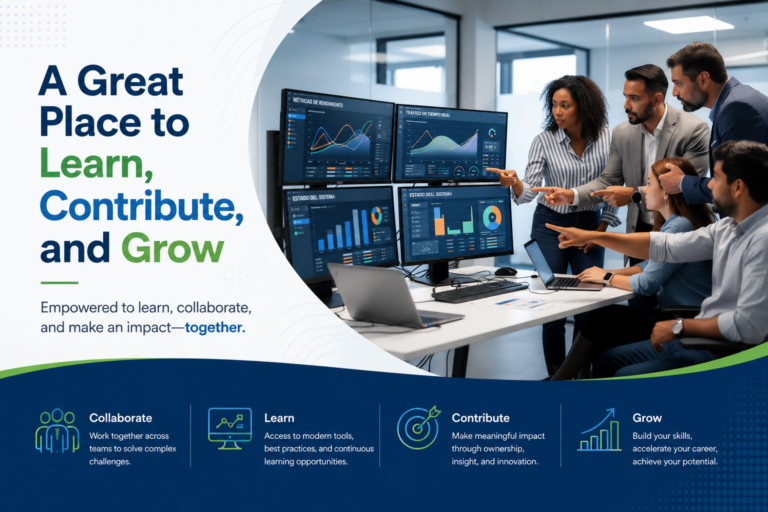
A Great Place to Learn, Contribute, and Grow – Collins Obi

SEAMFIX is an excellent organization that fosters a culture of collaboration, innovation, and continuous learning. The company provides a supportive environment where the Support, Engineering, and Product teams work seamlessly together to deliver high-quality, mission-critical solutions.

The organization is committed to developing reliable and secure digital identity platforms, with a strong emphasis on compliance, operational excellence, and customer satisfaction. Its products, including BioSmart Legacy and BioSmart X, Fixiam and many more, demonstrate a clear focus on delivering robust, scalable, and secure solutions that meet industry and regulatory standards.

SEAMFIX also promotes professional growth by providing access to modern technologies, best practices, and continuous learning opportunities. The company’s commitment to technical excellence, teamwork, and employee development makes it an outstanding workplace for professionals seeking to build their careers in a collaborative and innovative environment.

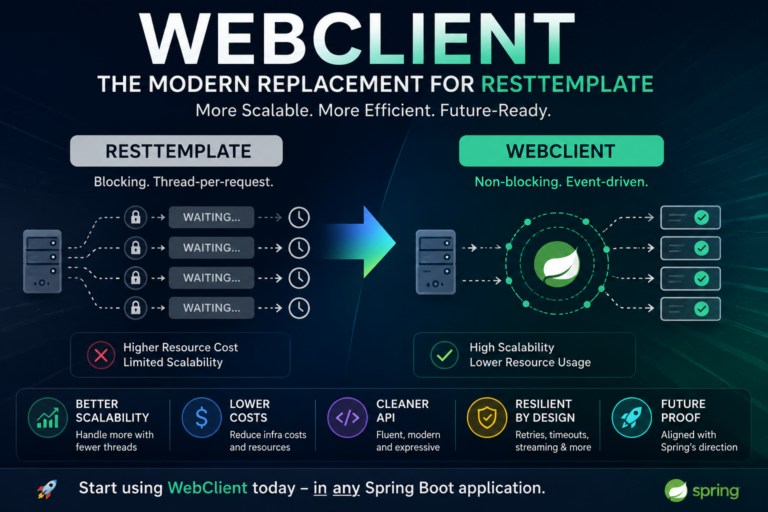
🚀WebClient: The Future of HTTP Communication in Spring

For years, RestTemplate has been the default HTTP client for Spring developers. It’s simple, familiar, and has powered countless production applications.

But here’s something many developers overlook:

Spring no longer recommends it for new development.

Instead, the Spring team recommends WebClient and not just because it’s reactive.

Here’s why:

✅ RestTemplate is in maintenance mode. It’s still supported, but it won’t receive major new features.

✅ WebClient is non-blocking, allowing your application to handle far more concurrent requests without tying up threads.

✅ You don’t need to rewrite your application. WebClient works perfectly in traditional Spring MVC applications and can even coexist with RestTemplate.

✅ Migration can be gradual. Start using WebClient for new integrations while leaving existing RestTemplate code untouched.

Beyond reactive programming, WebClient also gives you a fluent API for retries, timeouts, streaming, and composing multiple HTTP calls with much less boilerplate.

The biggest misconception?

Many developers think adopting WebClient means migrating their entire application to Spring WebFlux.

It doesn’t.

You can start using WebClient today in your existing Spring Boot MVC project and migrate at your own pace.

If you’re starting a new Spring project in 2026, WebClient should probably be your first choice.

Have you migrated from RestTemplate to WebClient yet? What has your experience been?

How Governments can Overcome Challenges in Self Service Implementation for Access to Public Services

It was supposed to be a simple process. Citizens would enroll for public services, get verified instantly, and access what they needed without any problems. But for government agencies, the reality looked very different.

A new self-service platform had just launched, promising to eliminate long queues and paperwork. Yet, adoption of this platform was slow. Citizens struggled with the system, fraudulent applications were on a high side, and outdated government databases couldn’t keep up. The very solution that was meant to simplify service delivery was turning into a logistical nightmare.

The Biggest Challenges of Self-Service Implementation

  1. Low Citizen Adoption Many people either lack the digital skills to navigate self-service platforms or don’t trust online systems with their personal data. Without widespread adoption, the entire system falls flat.
  2. Security & Fraud Risks Digital platforms introduce new vulnerabilities—identity theft, fake applications, and system breaches. Fraudsters find loopholes, and without proper security, governments risk losing public trust.
  3. Legacy System Integration Most public sector agencies still rely on outdated infrastructure that can’t communicate with modern self-service platforms. This leads to inefficiencies, duplicate records, and failed verifications.
  4. Data Accuracy & Verification Issues Poor-quality submissions—blurry photos, incorrect information, duplicate records—create bottlenecks, forcing manual reviews and slowing down service delivery.
  5. Resistance from Internal Stakeholders Government employees used to manual processes may resist digital transformation, fearing job displacement or increased workload from troubleshooting new systems.

You are still reading up till this point because I have mentioned pain points that you most probably relate to. Now let’s discuss how Seamfix helps in Overcoming Common Challenges in Self-Service Implementation

How Seamfix Helps Overcome These Challenges

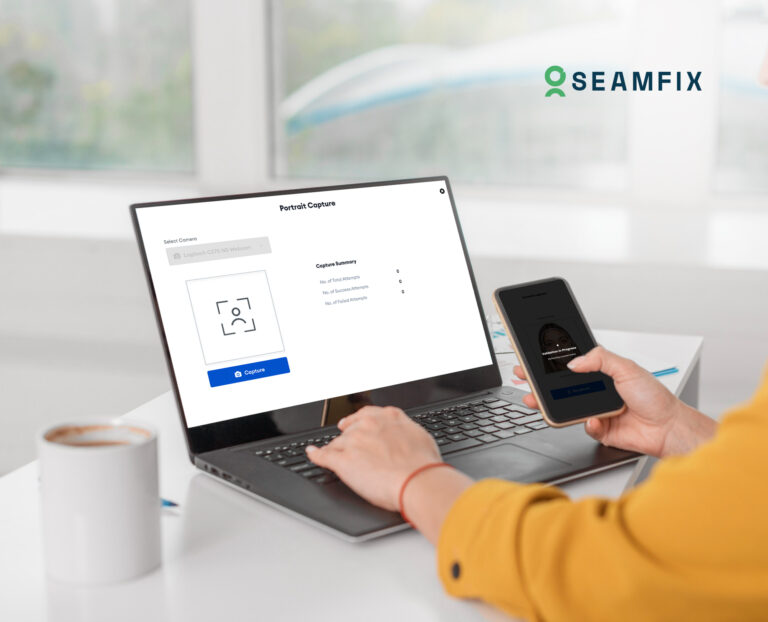
  1. Driving Citizen Adoption with User-Friendly Solutions Seamfix’s Self-Service Enrollment platform simplifies onboarding. With mobile-first design and multilingual interfaces, even first-time users can apply for services with ease. 
  2. Advanced Security & Fraud Prevention Seamfix integrates AI-driven fraud detection, biometric authentication, and liveness detection to prevent impersonation and document forgery. Governments can be rest assured that only genuine applications get processed.
  3. Seamless Integration with Existing Systems With API-driven architecture, Seamfix connects modern platforms to legacy databases, enabling smooth data flow between systems. This ensures faster approvals and prevents duplicate records.
  4. Automated Data Quality Checks OCR-powered document extraction, AI-enhanced facial matching, and real-time error detection ensure that only high-quality data enters government databases, reducing rejection rates and speeding up processing.
  5. Engaging Internal Stakeholders in Digital Transformation Seamfix provides training and support to help government employees transition smoothly. With workflow automation and role-based access control, employees spend less time on manual verification and more on strategic tasks.

Self-service platforms are the future of public services, but the problems associated with implementation most definitely can not be ignored. By leveraging AI-driven security, seamless integrations, and user-friendly enrollment, Biosmart X from Seamfix ensures governments can roll out digital services successfully without the headaches.

The shift to self-service doesn’t have to be a stressful process. With the right partner, governments can improve efficiency, reduce fraud, and enhance citizen experiences.

Ready to make self-service work for your agency? Seamfix has the solution.

Book a demo today!

How Self-Service is Enabling Access to Public Services

Daniel, an African Immigrant who lives in the UK, needed to renew his passport. It should have been a simple process, but it turned into a frustrating ordeal filled with endless paperwork, long embassy queues, and unpredictable processing timelines.

Jessica, a mother living in a rural East African town, wanted to get a driver’s license., but the nearest licensing office was miles away, requiring an entire day of travel. With limited transportation options and a family to care for, she had to choose between handling her responsibilities or making the exhausting journey just to get a single document.

Meanwhile, in a small town in Southern Africa, a government agency is overwhelmed with an outdated system for verifying citizen identities for social welfare benefits. They have to deal with long queues, inefficient processes, and rising fraud cases that make it harder for the people who genuinely need assistance to get it.

The Challenges Facing Public Services

As demand for services increases, citizens often face delayed or inefficient experiences. A recent report from Manchester Metropolitan University states, “The challenges public services face are complex and cumulative…across multiple parts of the public sector, including health, social care, criminal justice, and education, staff are leaving their professions, and are getting harder to replace.” With these ongoing issues, self-service platforms offer a timely solution, streamlining service delivery and improving accessibility.

The Shift Towards Digital Public Services   

Self-service platforms are breaking down barriers by providing citizens with autonomous access to services like driver’s license renewal, passport renewal, NIN enrollment and other public benefit applications. Through secure, AI-driven verification and biometric authentication, governments can make public services more efficient, accessible, and fraud-proof.

How Self-Service Platforms Improve Access

  1. Convenience and 24/7 Availability
    Jessica could have renewed her drivers license from her phone instead of traveling miles to a government office. These platforms allow citizens to complete essential tasks anytime, from anywhere.
  2. Faster Processing and Reduced Bureaucracy
    Automation reduces delays and human errors, speeding up applications, identity verification, and approvals compared to traditional processes.
  3. Enhanced Security and Fraud Prevention
    Self-service platforms integrate biometric authentication and AI-driven verification to prevent fraud, ensuring a secure and trusted service.

Governments worldwide are facing the dual challenge of delivering efficient public services while maintaining airtight security and compliance. With the growing demand for seamless, secure, and scalable solutions, the need for self-service platforms is more critical than ever.

At Seamfix, we are building the future of digital public services today. Our self-service suite offers the following benefits:

  • Citizens can submit applications and documents easily via their smartphones.
  • Automated data capture from identity documents ensures accuracy and efficiency.
  • Liveness Detection & Anti-Spoofing technology prevents fraudulent attempts with real-time security checks.
  • Contactless fingerprint capture enables remote biometric enrollment using smartphone cameras.
  • The platform detects poor submissions and prompts recaptures for accuracy.
  • Data is securely validated against official records to ensure legitimacy.

Want to learn more? Click the link below to request a Demo

Cybersecurity Trends in 2025: What Organizations Need to Prepare For

A leading software firm received a telephone call from the company’s CEO. The CEO urgently requested a $10 million wire transfer to finalize a confidential acquisition deal. The CFO, recognizing the familiar voice of his boss, authorized the transaction without hesitation.

There was just one problem… the CEO never made that call.

Hackers had used advanced deepfake technology to create an almost perfect replica of the CEO’s voice. By the time the fraud was uncovered, the funds had vanished into untraceable offshore accounts. The breach not only caused financial losses but also damaged investor confidence in the company’s cybersecurity measures.

Deepfake scams are just one of the evolving cyber threats businesses must guard against in 2025. 

As cybercriminals adopt more sophisticated tactics, organizations must stay ahead of emerging risks. 

Here’s what they need to prepare for.

1. Deepfake Attacks and AI-Powered Scams

With AI-generated deepfakes becoming nearly indistinguishable from real videos and voice recordings, cybercriminals are using this technology for fraud, blackmail, and corporate espionage.

How to Prepare: Companies must implement biometric multi-factor authentication for transactions and train employees to recognize deepfake indicators.

2. Ransomware Gets More Aggressive

Ransomware groups are no longer just encrypting data—they’re threatening to publicly leak stolen information unless paid.

How to Prepare: Organizations should enforce zero-trust security models,by verifying all users, limiting access, and continuously monitoring activity. They must also back up data regularly and train employees to detect phishing threats

3. The 5G and IoT Security Dilemma

With billions of IoT devices connecting to ultra-fast 5G networks, hackers have more entry points than ever. Many smart devices have weak security protocols, making them easy targets.

How to Prepare: Businesses must implement IoT security frameworks, require strong authentication, and regularly patch vulnerabilities.

4. Cloud Security: The New Battleground

As more businesses shift to the cloud, misconfigurations, weak credentials, and API vulnerabilities are leading to data breaches.

How to Prepare:Organizations should adopt cloud-native security solutions, enforce strict access controls through identity and access management (IAM), and conduct regular cloud security audits

5. Insider Threats on the Rise

Not all cyber threats come from external hackers—sometimes, the biggest risk is within. Malicious employees, careless workers, or disgruntled former staff can misuse their access to expose sensitive data or assist cybercriminals, either intentionally or unknowingly.

How to Prepare: Organizations should implement Identity and Access Management (IAM) solutions to ensure employees only have access to the data and systems necessary for their roles. Adopting role-based access control (RBAC), enforcing biometric multi-factor authentication (MFA), and using behavioral monitoring tools can help detect unusual activity and prevent unauthorized access. Regular security awareness training ensures employees understand the risks and responsibilities associated with their access privileges.

How Seamfix iAM Can Help Your Organization Stay Secure

How Seamfix iAM Can Help Your Organization Stay Secure


  • Advanced Multi-Factor Authentication (MFA)
    Prevent unauthorized access with biometric based multi-factor authentication (MFA) adding extra verification layers beyond passwords.
  • Role-Based Access Control (RBAC)
    Limit access to critical systems based on user roles, ensuring employees only have necessary permissions and reducing insider threats.
  • Real-Time Monitoring & Behavioral Analytics
    Modern IAM systems track user activity and detect anomalies like failed login attempts or unusual access times, triggering immediate alerts for security teams.
  • Comprehensive Audit Trails
    IAM solutions log every user action, from login timestamps to resource access, aiding in breach detection and forensic investigations.

Cyber threats are evolving—Seamfix helps your business stay secure, compliant, and ahead of attackers. 

Click the link below to schedule a call today.

[Book A Demo]

Your Employees Are Your Biggest Security Risk

When it comes to cyber threats, a lot of organizations focus on external dangers; hackers, malware, and data breaches. However one of the most significant and overlooked risks often comes from within your own organization; your employees. 

 A study by Kaspersky found that in the past two years, 26% of cyber incidents were due to employees intentionally violating security protocols, nearly matching the 30% caused by external hacking attempts. 

While employees are essential to the success of your business, their access to sensitive information can inadvertently or intentionally become security risks. 

This is especially true when it comes to Identity and Access Management (IAM), a crucial system for controlling who can access what, when, and how. 

Unfortunately, improper IAM practices can lead to vulnerabilities that employees may exploit, whether intentionally or not.

Here’s how:

1. Unrestricted Access Rights

One of the most common internal IAM risks is giving employees unfettered access to systems and data that aren’t necessary for their job. Over-permissioning is a big risk in many organizations, where employees may have access to sensitive information or critical systems beyond their role.

2. Weak Authentication Practices

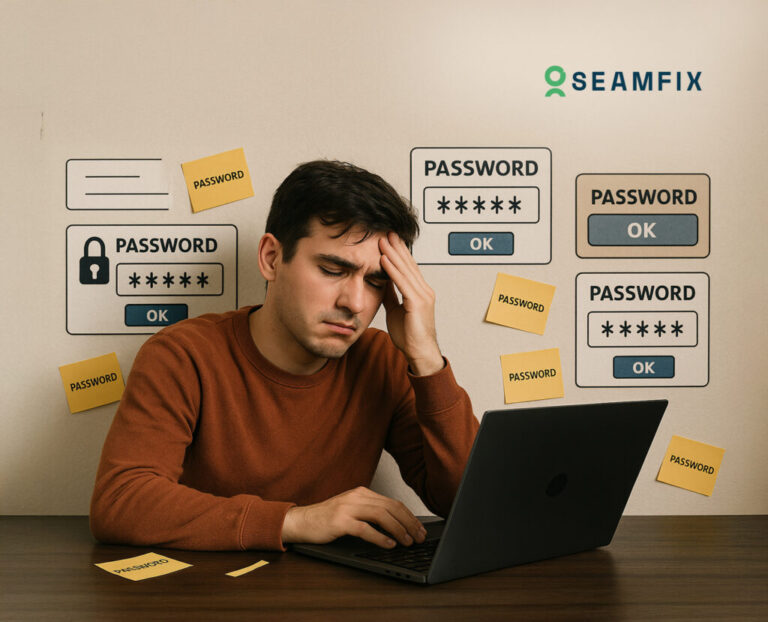
Weak passwords, reusing passwords across platforms, and not enabling multi-factor authentication (MFA) are all IAM issues that put businesses at risk. Even employees with good intentions can compromise security if they aren’t following best practices for authentication.

3. Lack of Biometric Authentication

Without biometric authentication, employees can share or misuse credentials, making it harder to verify identities. Adding fingerprint or facial recognition ensures only authorized users access critical systems, reducing insider threats.

4. Inadequate Exit Management

When employees leave a company, whether voluntarily or involuntarily, it’s critical that their access to systems and data is promptly revoked. Failing to do so can leave the door open for former employees to exploit lingering access to sensitive areas.

5. Privileged Account Abuse

Privileged accounts, such as those held by system administrators or executives, have extensive access to sensitive systems. If these accounts are not properly managed or monitored, they become prime targets for abuse, whether it’s intentional or unintentional

Strengthening IAM to Protect Your Business

The reality is clear: your employees, whether intentionally or unintentionally, can pose a significant risk to your company’s security through improper identity and access management practices. 

These risks can be mitigated with SeamFix iAM 

Now you can

  • Implement strong authentication protocols, such as biometric multi-factor authentication (MFA), to protect against unauthorized access.
  • Establish clear role-based access controls (RBAC) to limit access to sensitive systems.
  • Implement the principle of least privilege, ensuring employees only have access to the systems and data necessary for their role.
  • Ensure proper exit management to revoke access for departing employees immediately.
  • Monitor privileged account activity closely to avoid misuse of powerful accounts.


By integrating Seamfix iAM best practices, you can turn your employees from potential threats into your first line of defense.

When every member of the team understands their role in protecting the company’s digital assets, your business can operate with confidence, knowing that security isn’t just an IT responsibility — it’s a shared responsibility.

Manage your employees’ access  like a pro with Seamfix iAM! 

Book a free consultation today to see how it works and streamline your workforce access control.

The Pros and Cons of Biometric Authentication: What IT Professionals Need to Know

According to Cobalt, the cost of cyber threats is projected to rise to $10.5 trillion by the end of this year. These threats are becoming more innovative. Thankfully,  biometric authentication offers a promising solution to help improve the security of your organization. 

Biometric technology uses physical or behavioral characteristics that are unique to every individual. Characteristics like fingerprints, facial recognition, or  even voice patterns. This authentication system stands as a compelling alternative to traditional passwords. But is it the ultimate solution you have been seeking? 

Let’s discuss some pros and cons so you can decide.

Pros of Biometric Authentication

1. Unlike passwords or PINs that can be guessed or stolen, biometric data is unique to each individual. This makes it significantly harder for cybercriminals to replicate or compromise. For example, a hacker might crack a weak password, but duplicating someone’s fingerprint is far more challenging.

2. Biometric authentication takes out the need for your staff to  remember complex passwords or even carry physical tokens. Just by scanning their  fingerprint or face, they can quickly and seamlessly access their devices or accounts. This is particularly valuable when you are managing multiple systems daily.

3. These systems ensure that access into platforms and tools is undeniably tied to an individual. This non-repudiation capability can strengthen audit trails, making it clear who accessed sensitive data and when.

4. Modern biometric technologies like the Seamfix iAM are increasingly easy to integrate with existing IT systems. From multi-factor authentication to role-based access control, biometrics can complement other security measures, providing layered protection for businesses.

Now the Cons?

1. Storing biometric data raises significant privacy issues. If a biometric database is breached, the stolen data cannot be changed—unlike a password. This poses a long-term risk, as individuals’ biometric traits are permanent.

2. Implementing biometric systems can be expensive, especially for smaller organizations. Costs include purchasing hardware (like fingerprint scanners) and software, as well as ongoing maintenance.

3. Some regions have strict regulations governing the collection and use of biometric data. For instance, the GDPR in Europe and the CCPA in California impose stringent requirements, making compliance a potential challenge for IT teams.

Now, should IT Professionals Adopt Biometrics Technology?

While biometric authentication offers undeniable benefits, it’s not a one-size-fits-all solution. IT professionals should adopt some best practices, especially concerning privacy and implementation costs:

  • Ensure that the stored biometric data of your staff is encrypted to prevent unauthorized access from malicious persons.
  • Combine biometrics with other authentication methods for a more robust security setup.
  • Conduct training sessions for your employees on the proper use, limitations and importance of these systems.
  • Keep biometric hardware and software up to date to address vulnerabilities and improve accuracy.

Biometric authentication has changed the way we approach security. However, it is crucial to address its drawbacks, like privacy concerns and implementation challenges before fully adopting it.

Ultimately, the benefits of biometric authentication far outweigh its drawbacks. You can significantly improve your organization’s security by adopting a biometric system like the Seamfix iAM.

Do you want to get on board with Biometric Authentication for your systems?

Visit Seamfix.com/iAM  to get started or click on the link below to book a demo

[Book A Demo]

Seamfix Partners with ISSAN to Strengthen Identity Security in Nigeria

Digital threats are becoming increasingly sophisticated and as a leading provider of identity management and cybersecurity solution we are taking bold steps in championing identity security. We recently sponsored the ISSAN Cybersecurity Roundtable, held at the Radisson Blu Hotel, Victoria Island, Lagos, on March 25, 2025.

Themed The Future of Identity and Access Management in a Zero-Trust Digital World, the event brought together top industry leaders, cybersecurity experts, and technology innovators to discuss critical advancements in digital identity security. 

Our collaboration with the Information Security Society of Africa – Nigeria (ISSAN) highlights a shared commitment to equipping businesses with secure, seamless, and scalable identity and access management (IAM) solution.

Addressing the Challenges of Identity Security

As cyber threats continue to evolve, organizations must adopt proactive security measures to protect their digital infrastructure. Seamfix iAM helps organizations of all sizes streamline workforce identity security by simplifying access control, mitigating insider threats and ensuring compliance with global security standards.

According to Chimezie Emewulu, our Group CEO and Co-founder of Seamfix, “The ISSAN Cybersecurity Roundtable serves as a crucial platform for bridging the gap between technological innovation and expert advisory services. Partnering with ISSAN allows us to empower organizations with user-centric identity management solutions that fortify security while eliminating risks associated with insider threats. Together, we are tackling one of the most pressing cybersecurity challenges of today’s digital landscape; Identity security.”

The Importance of a Zero-Trust Approach

Recently, Identity security has been the foundation of robust cybersecurity frameworks. ISSAN’s President, Dr. David Isiavwe, Ph.D., reinforced this point, stating, “Seamfix’s IAM solutions align perfectly with ISSAN’s mission to safeguard electronic platforms used for e-commerce and digital transactions in Nigeria. This collaboration ensures organizations have the tools and expertise they need to thrive securely.”

The ISSAN Cybersecurity Roundtable provided an insightful platform for discussions on best practices in identity security, featuring keynote addresses, expert panel discussions and a live demonstration of our revolutionary product Seamfix iAM. Participants explored practical strategies for implementing a zero-trust security approach, ensuring businesses can navigate the complexities of the modern cybersecurity landscape effectively.

Missed the roundtable, catch a recording of the LiveStream Here.

Also, catch all the highlights in the video below

Want to implement Seamfix iAM solution for your business? Click here to book a demo

The NHS Data Breach: A Costly Lesson on Security Failures

In August 2022, a ransomware attack on the NHS exposed the personal data of 79,404 people and disrupted critical healthcare services. The breach originated from a single point of failure: a customer account without multi-factor authentication (MFA).

The Advanced Computer Software Group, a major IT provider for the NHS, was responsible for securing this data. However, the UK’s Information Commissioner’s Office (ICO) found serious security lapses in the company’s approach. As a result, Advanced paid a fine of £3 million for failing to implement adequate protections. This fine was originally set at £6 million by the ICO but was reduced due to the company’s cooperation with authorities.

What Went Wrong?

Attackers gained access through an account lacking MFA, making it easy to get into the system. So while some systems had security layers in place, gaps existed that hackers exploited. The breach affected NHS 111 services, patient check-in systems, and access to medical records.

The Cost of Weak Security

Beyond the financial penalty, the breach damaged public trust and strained an already pressured healthcare system. The lack of proper access control turned what could have been a contained attack into a widespread crisis. This could have been prevented by implementing a robust identity and access management system like Seamfix iAM.

How Seamfix iAM Could Have Prevented This

Seamfix iAM eliminates weak access points by enforcing strong security policies.

  • Mandatory Biometric Based Multi-Factor Authentication via fingerprints or facial recognition, preventing unauthorized access, even if passwords are compromised.
  • Role-Based and Rule-Based Access Control, based on the least privilege principle, ensuring only the right people access sensitive data. This gives you control over who sees what.
  • Real-Time Monitoring that allows you to detect suspicious activity, including access attempts.

A Stark Reminder for Organizations

As the ICO, John Edwards stated, “There is no excuse for leaving any part of your system vulnerable.” Companies handling sensitive data must invest in robust security. Seamfix iAM ensures that no one gets in unless they should be in.

Are your systems secure? Or are you waiting for a breach to teach you the hard way?

Let’s show you how the Seamfix iAM works.

Schedule a demo

Oracle’s Data Breach: Why Passwords Are No Longer Enough

Oracle, one of the world’s largest tech companies, reportedly recently confirmed a security breach. A hacker gained access to their systems and stole login credentials tied to over 140,000 domains, including those of companies and government agencies. But the breach didn’t stop there. The attacker demanded payment to delete the stolen data.

This breach wasn’t caused by guesswork or brute force. The attacker exploited old client credentials and weak security in Oracle’s single sign-on (SSO) system. Once inside, they stole encrypted passwords and passed them to third parties. Some of these passwords were cracked, while others had been reused. 

If Oracle with its resources and reach can be compromised through a single weak link, what does that mean for you?

It’s easy to believe your setup is secure because you probably have IT policies,  password rules and maybe even encryption. But the thing is  passwords, no matter how complex, are still passwords. They can be phished, reused, stolen or even cracked. Once someone has it, they don’t need your permission, they just walk into your business without you even knowing.

Are you still trusting passwords to guard your business?

The Oracle breach exposed what many prefer to ignore. Your real vulnerability might not be your firewall or your antivirus, it’s your login box. And if a threat actor can compromise your SSO or LDAP infrastructure, everything behind it becomes fair game.

The fallout of this breach wasn’t just technical, it was reputational. Oracle had to face customers, regulators and the media. Clients had to assess their own exposure. I mean what would you say if it were your business in the news? 

All of these would have been prevented if only they had a robust Identity and Access Management solution in place. This solution would have stopped the attack before it even started. 

This is why we launched Seamfix iAM. It doesn’t just make logins harder to steal, it makes them worthless to attackers. With biometric based multi-factor authentication built-in, application layer authentication and role based access control, you have nothing to worry about.

The question isn’t whether you should make the switch to passwordless authentication with Seamfix iAM, it’s a matter of when.

Let’s show you what the Seamfix iAM can do for you, please click below to schedule a demo.

Schedule a demo